17 The Equity Pivot for Black Women: How to Advocate for Yourself in Performative Workplace
Apr 22, 2026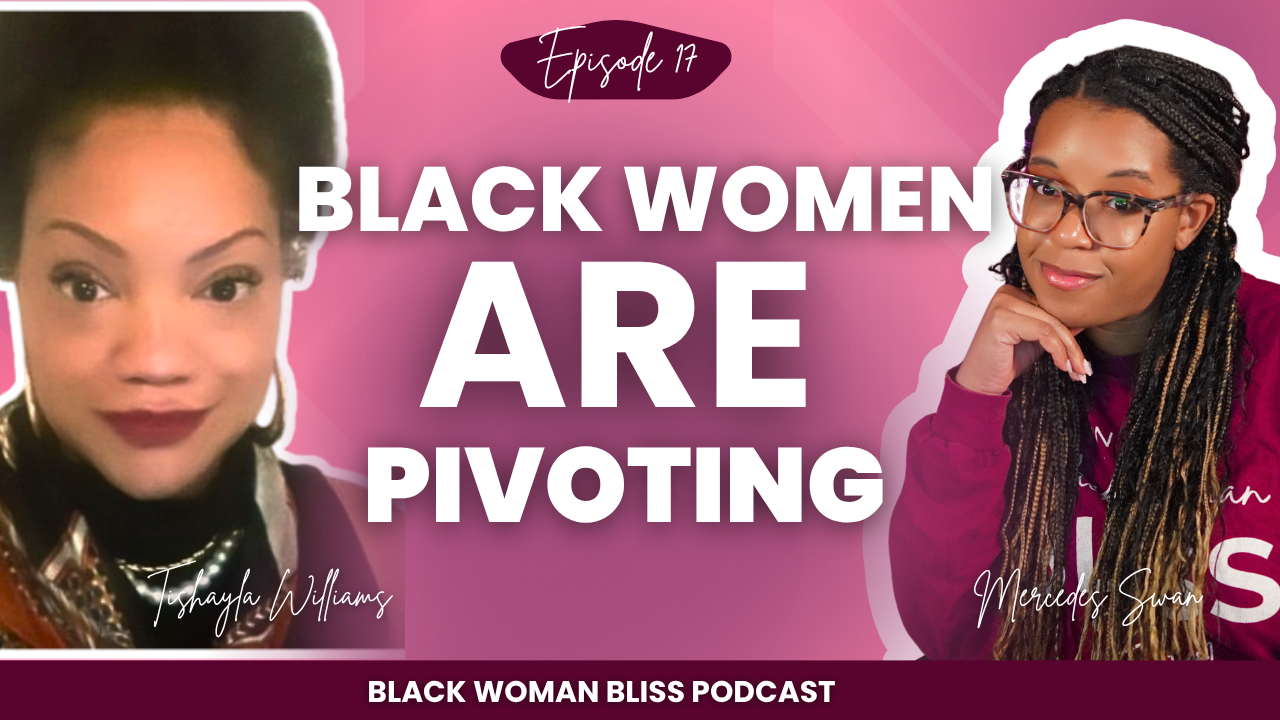
If you are a Black woman trying to grow your career right now, you do not need anyone to tell you that the workplace can feel complicated. You can be brilliant, qualified, deeply committed, and still find yourself navigating systems that were never built with your full humanity in mind. And what makes it even more exhausting is when companies say all the right things about equity, inclusion, and leadership, but the minute the pressure shifts, so does their commitment.
That is the heart of this conversation.
In this episode of the Black Woman Bliss Podcast, I sat down with Tishayla Williams, an I/O psychologist, founder of The TW Collective, former social worker, and Army veteran, to talk about the equity pivot. Together, we unpack what equity actually looks like in the workplace, how performative equity harms Black women, and what it means to pivot with purpose instead of staying stuck in systems that keep asking us to shrink.
And sis, this conversation is not just about naming what the inequity. It is about helping you recognize what you are experiencing, reclaim your clarity, and make your next move from a place of power. By the end of this post, you will have a clearer lens for spotting performative equity, understanding why it hits Black women so hard, and deciding what a more aligned career move could look like for you.
Watch the Episode:

What is performative equity in the workplace?
Let’s start here, because a lot of workplaces love the language of equity more than they love the labor of equity.
One of the strongest moments from this episode came right at the beginning when Tishayla named her hot take: one of the most problematic ways performative equity shows up is when organizations include equity language in their values, goals, or handbooks, then quietly remove it the moment the political climate changes. That kind of quick retreat reveals that the commitment was never rooted in real values. It was branding, not transformation.
And Black women know exactly what that feels like.
Performative equity is when an organization wants the image of being inclusive without doing the deeper work of changing culture, compensation, access, leadership pipelines, accountability, and daily behavior. It sounds good in a press release. It looks cute on a website. But it does not protect you in meetings, performance reviews, promotions, layoffs, or moments when your dignity is on the line.
That matters because equity is not a slogan. It is a system. It should show up in who gets hired, who gets promoted, who gets developed, and whose voice actually matters when decisions are made.
Why workplace inequity hits Black women so deeply
Black women are often expected to carry excellence, professionalism, emotional labor, adaptability, and resilience all at the same time. We are asked to be “grateful” for opportunities that do not fully include us. We are told to keep proving ourselves in environments that keep moving the goalpost.
That is why this conversation about workplace equity is so important. It is not abstract. It impacts how safe you feel at work, how much money you make, how confident you feel using your voice, and whether your career actually supports the life you are trying to build.
In the episode, Mercedes frames the conversation around three key questions: what role equity plays in the workplace, how inequity impacts Black women, and how Black women can bounce back through a purposeful pivot. That framing is powerful because it moves us out of confusion and into clarity. We are not just asking, “Why does this feel off?” We are also asking, “What do I want to do about it?”
The truth is, workplace harm does not just stay at work. It can follow you home. It can impact your nervous system, your self-worth, your relationships, your energy, and your ability to imagine something better for yourself. That is why naming the system is not negativity. It is wisdom.
The hidden cost of ambition for Black women
One thing I loved about this episode is how clearly it named the hidden cost of ambition.
Tishayla’s work centers helping organizations build equitable workplaces while also helping Black women protect themselves within them. That distinction is important. Because while we absolutely want better workplaces, Black women also need real tools for navigating the world as it is right now, not just as we hope it will become.
A lot of high-achieving Black women have been taught that the answer is always to work harder, get another credential, be more strategic, or become even more exceptional. And yes, strategy matters. Excellence matters. But we also have to tell the truth: overfunctioning in an inequitable system will not reward us for that performance.
Sometimes ambition becomes survival. Sometimes “being driven” is really a response to instability, under-recognition, or the fear that if you stop outperforming, you will lose opportunity.
That is why a purposeful pivot matters. A pivot is not giving up. A pivot is often the moment you decide that your brilliance deserves a better container.
What an equity pivot actually looks like
Let’s make this practical.
An equity pivot is what happens when you stop trying to force yourself to thrive in environments that only know how to tolerate you at best. It is when you begin making career decisions through the lens of alignment, protection, purpose, and sustainability instead of just pressure, fear, or familiarity.
That pivot might mean:
- You stop performing for an employer that has shown you its culture.
- You start asking harder questions in interviews about culture, growth, compensation, and support.
- You decide to leave a role that is draining you, even if it looks good on paper.
- You begin exploring entrepreneurship, consulting, leadership, or a different industry.
- You build a strategy for moving toward work that matches your values, not just your resume.
This connects so deeply to the Black Woman Bliss Framework. We are not just trying to escape something toxic. We are trying to discover our brilliance, fall into career and business love, and step into a life that actually feels like ours. My broader framework centers clarity, alignment, and creating a career and lifestyle rooted in your gifts, values, and long-term vision, not just what looks acceptable from the outside.
How to know when it is time for your own purposeful pivot
Sometimes the signs are subtle. Sometimes they are loud. Either way, I want you to pay attention.
It may be time for a purposeful pivot if:
- You constantly feel unsupported, unseen, or underpaid.
- Your workplace talks about equity, but you do not see it reflected in leadership, policy, or opportunity.
- You have to overperform just to receive baseline respect.
- Your values and your workplace culture no longer match.
- You feel more drained than fulfilled, and that feeling has become your normal.
- You keep imagining a different way of working, living, or building, but you keep talking yourself out of it.
This is where I want to lovingly challenge you. Just because you can survive an environment does not mean you are supposed to stay there. Black women are often praised for how much we can carry, but that does not mean carrying more is the goal.
The goal is alignment. The goal is freedom. The goal is building a career, business, and lifestyle that honor your energy, your gifts, and your full life.
A simple way to start your pivot without spiraling
Now let’s bring this down to earth, because I do not want this to be one of those posts that makes you feel seen but leaves you overwhelmed.
Here is a grounded mini-plan you can use this week:
1. Name what is actually happening
Stop minimizing what you have been experiencing. Is it inequity? Is it burnout? Is it misalignment? Is it lack of pay, lack of growth, or lack of safety? Clarity is the first step.
2. Identify your standards
What do you need in your next season of work? Salary, flexibility, remote work, leadership access, healthier culture, better boundaries, more purpose? Be specific.
3. Define what career love means to you
I teach that career clarity is about understanding both your short-term and long-term goals in alignment with your Black Woman Brilliance. That means not just choosing a title, but choosing work that aligns with your passions, values, mission, desired experiences, and lifestyle.
4. Choose one aligned action
Update your resume. Reach out to a mentor. Research roles. Apply for a new position. Start outlining your business idea. Join a community that can support your pivot. Do not underestimate the power of one clear move.
5. Build with sustainability in mind
Your next move should not just look good. It should support your peace. My training in the Black Woman Bliss Training Portal on Black Woman Balance reminds us that sustainability means creating a career, business, and lifestyle that can stand the test of time without burning you out in the process.
What organizations need to hear
I also want to say this plainly: Black women should not have to be experts in self-protection just to survive work.
If an organization says it values equity, then that commitment should still be visible when it is inconvenient. It should be reflected in compensation, promotion paths, management behavior, accountability, and the willingness to tell the truth about what is not working.
Anything less is performance.
And while this blog is here to support Black women first, I do believe leaders and organizations need to sit with that. Equity is not what you post. It is what people experience.
The real invitation of this episode
What I hope you take from this episode and from this post is that you are allowed to pivot before you are completely depleted. You are allowed to question what no longer fits. You are allowed to want more than survival.
A purposeful pivot is not always instant. Sometimes it starts with language. Sometimes it starts with grief. Sometimes it starts with finally admitting to yourself that the life you want will require a different level of honesty.
But once you tell yourself the truth, you can build from there.
And that is what this work is really about. Not just calling out inequity, but creating pathways to something better.
Join us inside the Black Woman Bliss Community
If this conversation hit home, love, do not process it alone.
Inside the Black Woman Bliss Community, we practice the mindset, strategy, and sisterhood that help Black women build aligned careers, businesses, and lifestyles. This is where you come when you are ready for more clarity, more support, and a more liberatory vision for your life and work.
Join the Black Woman Bliss Community:
https://www.mercedesswan.com/join
And if you are ready to go deeper into the Black Woman Bliss Framework and start mapping out your next move with intention, register for the Black Woman Bliss Blueprint Webinar here:
https://www.mercedesswan.com/bliss
You do not have to keep performing strength in spaces that do not pour back into you. You get to choose alignment. You get to choose clarity. You get to choose a career and life you actually love.
What is performative equity in the workplace?
Performative equity is when a company uses the language of inclusion or equity publicly but does not back it up through pay, leadership opportunities, policy, accountability, or culture. In this episode, Mercedes Swan and Tishayla Williams point to organizations removing equity language as soon as the political climate shifts as a strong example of performative commitment.
Why does workplace equity matter for Black women?
Workplace equity matters for Black women because inequity affects pay, advancement, psychological safety, belonging, and long-term career fulfillment. It also impacts life outside of work, including confidence, mental health, and overall well-being.
What is a purposeful career pivot?
A purposeful career pivot is a strategic move toward work that better aligns with your values, well-being, strengths, and long-term vision. It is not just leaving a bad situation. It is choosing a better one with intention.
How do I know if it is time to leave a toxic workplace?
It may be time to leave if you are consistently underpaid, unsupported, burned out, overlooked, or pressured to overperform for basic respect. It is also a sign if the company talks about equity but your lived experience tells a different story.
How can Black women make a career pivot with confidence?
Start by getting clear on what you want, defining your standards, identifying your strengths, and taking one aligned action at a time. Community, coaching, and clear strategy can make that pivot feel much more doable.
About Tishayla Williams and the Equity Pivot
About Tishayla Williams
Tishayla Williams is an I/O psychologist and founder of The TW Collective, where she helps organizations build equitable workplaces and supports Black women in protecting themselves within them. She is also a former social worker and Army veteran whose work explores the hidden cost of ambition and what thriving can look like for Black women in corporate spaces.
Connect with Tishayla
TikTok: Dr. Tishayla Williams
Learn more about The TW Collective
Email: impact@thetwcollective.com
Author