19 What To Do After Being Laid Off: How Black Women Are Building Businesses After Job Loss
May 27, 2026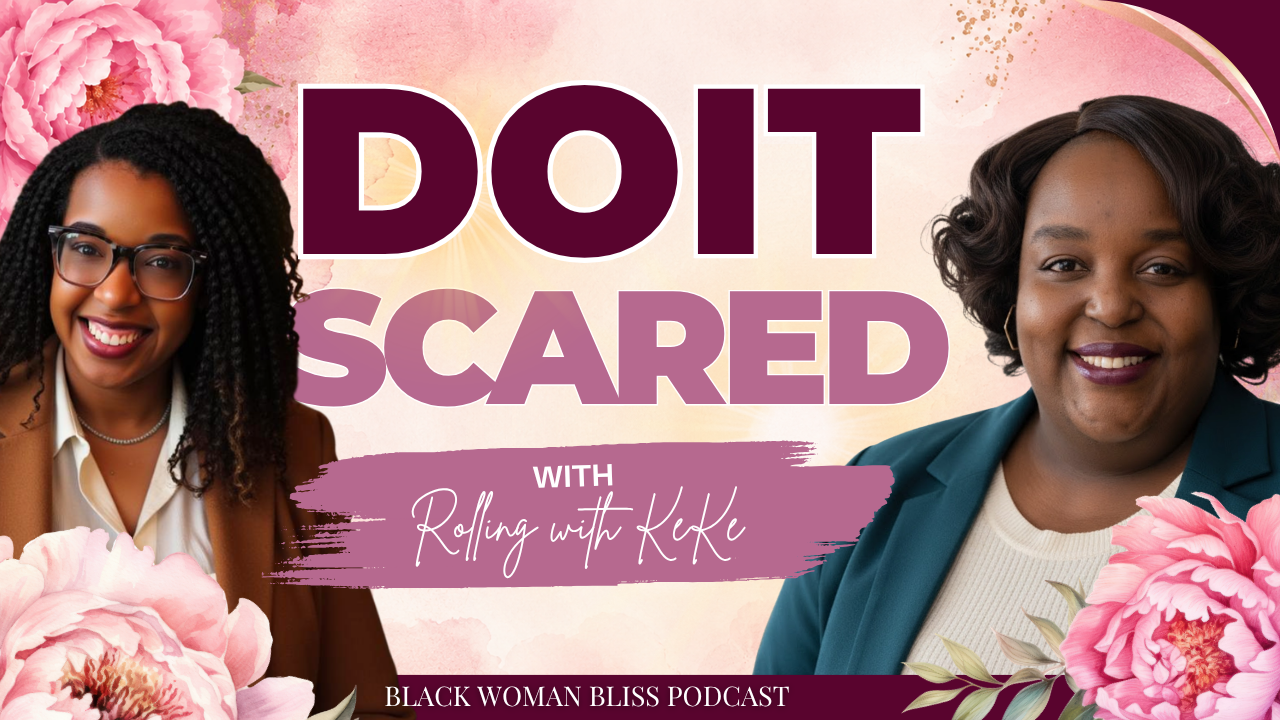
What To Do After Being Laid Off: How Black Women Are Building Businesses After Job Loss
Being laid off can shake your confidence, your money, your routine, and your sense of identity.
And if you are a Black woman who has been laid off recently, you might be asking yourself:
- What do I do now?
- Do I look for another job?
- Do I finally start the business?
- How do I make money while I figure this out?
- How do I recover emotionally after being pushed out of a workplace I gave so much to?
In this episode of the Black Woman Bliss Podcast, Mercedes Swan sits down with LaKesha “Rolling with Keke” Moore, Senior Event Strategist, accessibility advocate, and founder of Rolling With Keke™, to talk about what it means to build a business after being laid off and how to do it scared.
This conversation is for the Black woman who is trying to turn job loss into clarity, confidence, and aligned action.
Listen to the Full Episode
If you are a Black woman who has been laid off, is scared to start over, or is wondering whether this is the season to build your business, this episode will meet you with honesty, strategy, and encouragement.
During this episode, we're covering:
- Why strategic and accessible event planning is more than logistics
- How Keke became the “unicorn” of event planning
- What it means to build a business after being laid off
- Navigating entrepreneurship as a plus-size Black woman with a disability
- Why accessibility should be centered from the beginning, not added at the end
- How to take action on your dreams before you feel fully ready
- The connection between faith, purpose, business, and Black Woman Brilliance

Why Are So Many Black Women Talking About Layoffs Right Now?
Black women are navigating a difficult career and economic moment. The Economic Policy Institute reported that Black women experienced some of the largest employment losses in 2025, with Black women’s employment-to-population ratio dropping to 55.7%, one of the sharpest one-year declines in the last 25 years.
That means many Black women are not imagining this pressure. We are feeling the reality of an unstable labor market, layoffs, hiring freezes, workplace inequity, public sector cuts, DEI rollbacks, and burnout all at once.
And for many Black women, the question is no longer just, “How do I get another job?”
The deeper question is, “How do I build something that gives me more freedom, alignment, and ownership over my future?" so I never have to face this type of uncertainty again?
What Should You Do First After Being Laid Off?
After a layoff, the first step is not to panic-apply to every job you see. The first step is to pause and assess your situation so that you can decide clarity instead of fear. It means you create a plan that protects both your income and your vision.
If you were recently laid off, start here:
- Review your finances. Review severance, unemployment benefits, savings, health insurance, bills, and immediate income needs.
- Give yourself room to process. Job loss can bring grief, anger, shame, relief, confusion, or all of the above.
- Update your career materials. Refresh your resume, LinkedIn, portfolio, and professional bio.
- Reconnect with your network. Let trusted people know what kind of roles, contracts, referrals, or opportunities you are open to.
- Identify your transferable brilliance. Ask: What skills, experiences, and gifts do I have that can create value in a job, business, or consulting offer?
- Decide whether this is a job search season, business-building season, or both.
For many Black women, the answer is both. You may need income now, but you may also feel called to build something that gives you more long-term control. Take this assessment to get clear on which step you should take.
How Can Black Women Start a Business After Being Laid Off?
Starting a business after being laid off does not mean you have to have everything figured out immediately. It means you begin with what you know, what you have lived, what you are skilled at, and what people already come to you for.
In the episode, LaKesha “Rolling with Keke” Moore shares how she is building her business after being one of the Black women impacted by layoffs. But Keke is not building from scratch in the way people often think. She is building from years of expertise, experience, purpose, and what Mercedes calls Black Woman Brilliance.
Keke brings over 20 years of experience as an event strategist and accessibility advocate. Through Rolling With Keke™, she helps organizations create event experiences that are strategic, accessible, inclusive, and safe.
Her business is not random.
If you want to start a business after being laid off, do not begin by asking, “What business is trending?” Ask yourself:
- What do I know how to do well?
- What problems have I solved repeatedly?
- What do people know or trust me for?
- What lived experiences give me a unique perspective?
- What work feels connected to my purpose, values, and calling?
- What can I offer that people or organizations already need?
- That is how you begin building from your brilliance instead of building from panic.
What Does It Mean To Build a Business From Your Black Woman Brilliance?
Building a business from your Black Woman Brilliance means creating something rooted in your gifts, skills, lived experience, values, and purpose. It is not just about launching an LLC or making a logo. It is about building a business that aligns with who you are and the life you actually want.
For Keke, that brilliance lives at the intersection of event strategy, accessibility, inclusion, safety, logistics, creativity, and lived experience as a plus-size Black woman with a disability. That combination makes her work distinct and deeply needed.
Accessible event planning is not just a technical skill, it represents a hole in the event planning market. Your unique, unicorn skillset can set you apart.
So, believe this: the parts of your story you thought made you “too much,” “too different,” or “too specific” may actually be part of your competitive advantage.
Transcripts:
Mercedes Swan (00:02.046)
Okay, Keke girl, rolling with Keke.
I'm so excited for this conference. I love every interaction that I have with you, so I'm excited. I know this conversation is gonna be really good. We have been starting off with hot takes, okay? And I feel like you got a lot of hot takes. I feel like you could do a whole episode of hot takes, okay? But I do want, we got a whole episode, okay? So don't go too much, Keke. But I do wanna know what your, so Keke's in event planning, of course, as you know. So much amazing experience. But I wanna know, based on your experience, what you've done.
What is your event planning pet peeve?
Kesha (00:39.714)
Gosh, I think one of my biggest pet peeves is for the people who are in charge, like above the planners, not giving the planners a seat at the table. Like as soon as they say, hey, we want to have an event, like, you know, myself or, you know, another planner, like I should be sitting there at that table because it's not just hotel rooms and sleeping rooms and things like that. It's like, there's so much that goes in planning an event, caveat planning an event well.
that it makes sense to have the planner because you know, Mr. CEO could be like, oh, we're get a unicorn and ride through the middle of the ballroom. I'd be like, hold on, wait a minute, there's labor laws and then there's like animal things. And then like, you know, the hotel may not deal with that. And you know, what's the budget? Like all those things. I think that is my biggest pet peeve is that we need to see that at the table from the beginning.
Mercedes Swan (01:30.08)
Yeah, because all of those things would be avoided. That's how I feel about, I know we're talking about a vet plan, that's how I feel about HR. Because they want to come bring you in after they already made the mistakes, you know, there's some fines in there, they done lost thousands of dollars of whatever they did wrong. It's like if you would have just came to talk to me, listen, just call me. It's only five seconds. You could have avoided all of this.
Kesha (01:44.48)
it
Kesha (01:52.301)
emails, know, airmail, pigeon, you know, something that's not going to cost us 20 or $30,000 extra that's not in the budget. Let's put that out there. Yeah.
Mercedes Swan (02:04.294)
Period and like I promise you even even even if I wasn't already on the budget Okay, this would a call with me would have been cheaper. Okay a call with me would have been cheaper I'm not $20,000 for a 15 minute call. Come on, maybe one day in the future. Yeah, exactly period. Not yet. Very it we're working on it
Kesha (02:14.157)
I'm
Kesha (02:20.454)
That's it. That's it.
We gettin' there, we rolling towards that!
Mercedes Swan (02:31.008)
All right, Keke, well, we're gonna talk so much about your background, your experience in both the career and business spaces, because I think that's one of the things that so many black women are doing right now is pivoting. But I would love to learn, know, especially for the black women who have not maybe been in this space or haven't considered this as a career path or something that they, maybe they are excited to do it. Maybe the aesthetics or the design seems exciting, but they haven't quite done it yet. So tell us a little bit about like your background, what you've done and accomplished in this space and how you
got into event planning and strategy.
Kesha (03:02.859)
gosh, I think I'll start with how I got to event planning. At first, I, like many other people in the event space, I fell into it. I did not go to school for it. This is not a dream job of mine. I was working for Blue Cross and Blue Shield of North Carolina and the guy in HR, Tim is his name. I don't know how I his name so far, probably because he traumatized me. He came in and he said, I want three tables in the back of the auditorium, because the HR campus had an auditorium and it's on cafeteria.
Cool, not a problem. Well, those three tables in the back of the auditorium turned into a full blown health fair. And this was back in the day when we didn't have wifi, so I was having them have like run in extra phone cords and know, people coming in, like know, blood pressure monitors and you know, the massage chairs. I'm sitting here like, I wake up from three tables.
to a whole, and then I had to get security involved because these people obviously weren't employees. But then at the end of it's like, I can do this. I can really do this. So my manager let me do that. Then the largest event that I did while I was at Blue Cross, I think it was like 8,000 plus people. So imagine like a state fair, but just on the campus. So there's rides, games, fireworks, like you name it, that they have a state fair. I had it on the campus. And the very first one that I did, I remember,
looking up at the fireworks and like shedding tears like, my God, the kid without the college degree did it. So that's how I got bit by the bug. That was 20 some years ago. Yes, I started when I was five.
Mercedes Swan (04:39.168)
what I'm talking about. All right, Keke.
Kesha (04:41.163)
five. But since then, I have gone through event planning classes at UNC Charlotte. I have a meeting planning certificate. I do have my bachelor's degree because the girl went back to college to finish her, finish what I started. And most recently, I am now certified and have some initials behind my name. So it's Keisha Moore, comma, DES, which stands for Digital Event Strategies. So yeah. And then I just recollected other.
Certificates like infinity stones because you know that's what us black women do we get bored and get a certificate or a degree I don't know much about rules, that's just what we do
Mercedes Swan (05:16.528)
Listen, Keke, I just want you to know that every time I record a podcast episode, it's my mission in life to say, stop collecting it, okay? I get it. I get it. I did it too. Okay, thank you. I'm talking to everybody, listeners included. I had to tell myself that because I went and got a DEI community engagement certification. said...
Kesha (05:29.058)
I'm done. I'm done.
Mercedes Swan (05:43.732)
Girl, you need to coach yourself. I don't even know why you wouldn't did this. So stop with the infinity stones of education, my sisters. So I love that.
Kesha (05:45.733)
you
you
Kesha (05:53.989)
I'm done. Yes, like we, yes. No more, no more certificates for me. That's how I did my DES. I'm like, okay, I'm cool. I'm cool right here.
Mercedes Swan (06:03.392)
You're good. Well, I mean, I actually think that's really interesting too for our next question because I think some of us We glamorize event planning, right? We see it as like oh my gosh I get to do the aesthetics and the design and a lot of event planners don't even get I'm not saying that it's bad or right, know good or bad I'm saying some event planners don't even do that, right? And so we get kind of into this like oh my gosh I'm putting on these large-scale like elegant events. They don't think about the logistics They don't think about the day-to-day the project management like those really
hard skills that are in the details. And so I think sometimes it could be like you say, hey, it wasn't my dream job, but I think it's a lot of people's dream job out there. And so from your perspective, you know, speaking specifically to other black women that might be interested in event planning, what would you say are some of the things that are like good about it and like what would make a black woman a good fit to go into this career path versus girl stay away, 10 foot pole, this might not be the career path for you.
Kesha (07:03.524)
definitely have to say I think you hit upon something when you're talking about the project management because there are so many correlations between project management and event management. So obviously you have to be organized like you're running other people's lives. So you obviously have to be organized. You have to be very, very
detail oriented, you know, I myself am a unicorn where I can zoom out to that 30,000 foot and you know, be in the strategy, but I can bring it all the way back down to, what color napkins going on these tables? So it's like, you have to be, and everybody can't do that. And that's not a bad thing. It's just, you know, as I started out, you know, started looking at like the things that I've done, it's like, I can do both, which, you know, again, makes me a unicorn, makes me a little bit more marketable, humble brag.
I'm a rag in there. But yeah, definitely detail oriented. You know, being a numbers person and you know, you have to be as cliche as it sounds. You have to be a people person like no person is an island when it comes to events. I think the biggest thing, you know, one of the biggest drawbacks that I've seen, even though I love my partners because I don't consider them to be vendors, is so much of being an event planner. So much of your job is counting on other people to do their job.
Mercedes Swan (07:49.568)
Put it out there, Keke. Let them know. Period.
Kesha (08:16.867)
and do it well. Because the flip side of, oh, you know, the glamour and the things like that is when things go wrong, regardless of A, B, if it's the catering, you know, if it's something with the hotel, they're not going to go to the A, B person. They're not going to go to the catering person. They're not going to go to the hotel person. They're coming to you. No matter if you want better in the kitchen cooking, it don't matter that you if you want the one that went up there made up the bed, it doesn't matter if you were the one who built the microphone. They are coming to you. So you definitely have to have a thick skin.
Like, you know, I'm not saying, know, be like hard as a rock or anything like that, but you gotta, you know, cause people are going to try to run up here. think that's within any industry. And then you couple being a black woman on top of that. You know, you, you basically gotta let these people know that you're not for play play. and then the other part of it is, my God, I get to go to so many different organs, you know, so many different destinations. Let me tell y'all something. I see the airport, the ballroom and my bedroom. That's it. If I am the person who is planning that event.
I want to say it again for the people in the back, because know y'all might not have heard me. I see the airport, the ballrooms, and my bedroom. Because typically, like, there's offsite and things like that, I do have somebody who handles those because you don't have accessibility. And you don't need to your rest. But that's it. Like, I'm trying to remember the last place. In Orlando, which is a great place to have an event, by the way. Shout out to the Renaissance Orlando at SeaWorld, who took such good care. A little disabled me. But I was on property.
The entire time I think I flew in on a Sunday or Saturday and flew back out on a Friday. Not one time did I go to SeaWorld, not one time. I mean, I had the opportunity, but it's long days. You know, I wanted to go see Shamu too. Literally like across the parking lot, but because I had to make sure that everything was okay and it was even to the point, you know, my mom and dad were able to travel with me that time. It was even to the point where my mom was like.
Mercedes Swan (09:56.352)
Hey, Carla! You are right there!
Kesha (10:10.709)
he should stop and eat your food because your head has to be on the swivel. So even though I'm sitting down eating, I'm like, okay, what is that server doing over there? Like, you know, does the speaker have enough water? Like, okay, we supposed to have a champagne toast at such and such time. And she's like, stop it. I'm like, I can't. Like, this is just like, even when I'm an attendee, which I think sometimes event planners make the worst attendees, cause we looking at everything. So I try not to be as critical cause it's like, I didn't plan this. I'm just here to enjoy. Just let it go.
Mercedes Swan (10:32.755)
Legends.
Mercedes Swan (10:38.999)
Yes. Well, I was sitting here thinking, because like anytime I've gone on like, and now I have no desire to be an event planner, but anytime I've gone to like a conference to speak, and I say that out of love, like I can appreciate it from afar. Some people say, I don't know how you do HR. I like, I love it, okay? We all have our callings, okay? But when I look at event planners, I have bless your heart energy. I could never, okay? So I love it, okay? But when I go to my little...
Go speak or whatever. I may have you know a couple sessions. I'm like I'm Tacking on an extra day. I'm gonna see this city y'all not flying me across the country. Let me see in this thing Okay. All right, so we gonna need to attack on couple days with Isha
Kesha (11:18.851)
Now usually because what I do, because the other thing is, you know, I'm very much anti-healthful culture. So events are work. So what I will do is fly in like a day before all the staff gets there and then leave a day after they leave. Because like, okay, bye. Love you. I mean, mean, but down time. So, but you know, as I've transferred, you know, moved over to entrepreneurship, I will definitely make sure that I give myself enough time either before the event or after the event.
to actually enjoy the city. So that's on my list, that's on my bucket list.
Mercedes Swan (11:50.84)
Period. We gotta see it, okay? We need you to see the country. Period.
Well, you started talking a little bit about what that looks like. I I think it's really challenging, right? As black women, when we're navigating the workplace, it is really hard for us sometimes to walk in our power, not because we don't feel confident or we don't have expertise, but sometimes we have to spend more time communicating that expertise sometimes, and we actually end up doing the work. And I can't imagine how challenging that is sometimes in event planning where you're trying to say, hey, you got to do this for this XYZ reasons, but they don't want to respect that or see that.
or listen to you or kind of buy into your ideas even perhaps because of your body right and so I would love to learn you know about your experience whether that's how you have experienced events or how you show up as an event planner as a black woman with a disability right in those spaces so I would love to hear your perspective on that what has your what have your learnings been and go from there yeah
Kesha (12:50.747)
So I tell everybody, I am everybody's favorite big black disabled event planner. And I say that because those are, you know, those are three things that have been used against me in life. Like I'm recently disabled, like for the last five years, but I've always been big and black. Like, you know, that's just it. I want to be healthy, yes, but that's another podcast. But those are things that have been used against me. So I've taken them.
to be, like, it's my superpower. Like, yes, I'm going to take up space, literally and figuratively. I love being a black woman, you know, happy International Women's Month. I just discovered that April is Black International Women's Month, so I'm getting ready to be even more, you know, but let me stay on target. And again, being disabled, like I've always, you know, made sure that other people feel welcome and make sure that whenever they roll into an event, like, they feel like they belong there.
Because I have experienced that because I roll in with my student and they're looking at me like, where's she supposed to go? What is she doing? I've even had somebody that asked like, hey, are you supposed to be here?
You're talking to me. And the irony of it is I have found my powers more since I've been disabled. Because I already know I'm taking up space. I get the Cadillac versions of scooters when I rent them because I'm going to be comfortable while I'm sitting, standing, rolling, whatever. Keke is going to be comfortable. So, you know, I have no problem rolling up to the front. That's why I let me talk to you. Come here. I'm in my auntie era. I have in my auntie era, so I don't know.
If it's been the shift between, your girl was medicated because I do believe in, you know, hey, talk to Jesus and a trained professional and get some help if you need to get help. About to be almost 50. I don't know what the switch has been, but it's like, I'm walking in this. I'm not going, I'm not going anywhere. Like you can look at me, it. You can do whatever it is that you need to do, but I'm here. I'm not going anywhere. And yes, I am the one that's in charge. So don't talk, don't look for nobody else. Don't talk to nobody else. Everything comes through Keke.
Kesha (14:53.762)
You know, even I even had that, like the CEO, like, yeah, he may want something, but when it comes down to this event, if Keisha didn't approve it, it does not get approved. And I let my team know because it really is like, you have to own it. You have to own, can't be like, well, you know, I think maybe this might work. We're like, look, this is what we doing. And then roll off. And I'm not that probably like, did she just? Yep, she did. And gone about my business. So you really have to own.
you know, whatever your it is, because we do have so much intersectionality as black women. You we're not just one thing. We're never going to be just one thing, but that's the beauty of it, right? Because we have all these different facets that make us up and you have to own it. Like, ain't no shame in my game. Like, yeah, I need an ADA room. Matter of fact, I need a suite so I can have room to bust the U-turn on this school. So it's like, what's good? What's up?
But yeah.
Mercedes Swan (15:50.176)
I love anytime I hear stories about like just unapologetic and I was I relate to that right because of course neurodivergence is a different form of disability and in different ways and shapes and forms But I do think that for a lot my diagnosis allowed me to just be very unapologetic of like I didn't hear what you said Go ahead and say it again I'm gonna need votes for this
Kesha (16:13.555)
No!
Mercedes Swan (16:16.136)
We're gonna need to have an agreement where you need a plan is written, right? And so I think that for so many of us and particularly for black women who are in spaces that feel high stakes, right? Like event planning feels high stakes when you're in it and something really bad happens that we feel like we have to shrink. Like we can't take up that space. We can't be unapologetic. And so we think that that's actually safety in practice. And so I love that you said like, actually,
being unapologetic, saying what I need, you know, taking control of what I am in charge with or I have been asked to do or hired to do, and doing that in a way that's like, hey, it's authentic, this is what I need, this is what we're doing. I think that's such an empowering story because I think a lot of us choose not to take up that space. So period, Keke, keep showing them, keep letting them know. You rolling, okay? You rolling.
Kesha (17:07.452)
you know I will. You know I will.
Mercedes Swan (17:14.193)
Hehehehehe
So then let's talk a little bit about what this looks like when you are actually hosting events. And so I know we've talked so much and I really just love this lens of accessibility that you have and understanding that intersectionality. And so I would love for you to talk about that. Like your content is so good where you're talking about all the mistakes, all the challenges, all these setbacks. And so for the people here who are maybe looking for providing a great experience, I know you talk about governance and strategy a lot.
and also talking about the accessibility pieces. What are, like what should event planners or individuals, whether they're formally event planner or not, be thinking about when they're putting on an event and that you, you know, please say all sizes, you know, whatever you feel drawn to speak about, but what do they need to know for rolling with Keke
Kesha (18:07.005)
I think the, you know, the biggest thing is accessibility should never be an afterthought. It shouldn't be like, we're on this event and we may have people coming in in a wheelchair. we're putting on this event and we may have people coming in who are hard of hearing or have low vision or like different things like that. Put it in the beginning because that affects how, you know, when you're doing site business, when you're going to look at these properties, don't get me wrong. I have stayed at some beautiful properties, but they just weren't accessible.
They were not like, you know, literally having, you know, a ballroom downstairs and I'm on the scooter, you know, check to make sure that your accessibility equipment is working because you know, I got stuck in a mobility elevator and that was fun. Like it just can't be a tag word. So, you know, look at, you know, as you're going in, like, you know, are there automatic doors? Because again, people think accessibility is somebody asking for something extra. I am of the mind that everybody, one word means
everybody. So an automated door is going to help a person who's carrying packages, the UPS guy, the FedEx guy, is going to help a mom who may be pushing a stroller, somebody who just had knee surgery has one of those little knee scooters. Because I mean, we're all to be honest, we're all one accident away from being disabled. Like, you know, my son, he had some issues and he heard his ACL. So he was temporarily disabled because he was on crutches.
So it's like, we never think about, like, we're literally right there. Like how people say you want paycheck away from being, you know, whatever, whatever. We are one good accident or one good health issue away from being disabled at any point in time, be invisible or invisible, because I'm not just, you know, concerned with the visible. Like if you need a quiet room, like I'm thinking like, okay, you know, people, oh, quiet rooms, oh, you know, whatever their feelings are about that. But that also could be a room for a mother who's a nursing.
Like, so it's not, it's really for everybody. So again, you know, looking at the interest is looking at where your ballrooms are, how easier they get to even down to the point. Like I take tape measures with me to measure the doors because an ADA room that's for a wheelchair is may not have the same width as an ADA room for somebody on a mobility scooter. Cause those are two different things. You know, the sound systems like are there onsite AB people.
Kesha (20:20.727)
Equip do they have the equipment there if there's somebody who's hard of hearing and like just like different things like that It's even dealing with your speakers like look we have some people in here who they may have epilepsy You can't do flash and lights in your presentation like it flows through literally everything same thing with food and beverage You need to make sure well we can probably know I don't need probably because if I have somebody who has a gluten Insensitivity or you know for religious reasons that you put pork Or you put some wheat on a plate
Now we got a problem. it's literally throughout everything. Like you can't miss anything because you just don't know particularly when you're doing public events because everybody's not going to tell you because some people they're not big and bold the way that I am. You know, they're just like I had a person at my last event in Orlando. Shout out Orlando. I'm coming back to Florida. And I literally because I knew she had a gluten sensitivity. Every time I saw her at the buffet, even though I had told them, I was like.
You good? You need me to go get And she's like, my God, like, she's like, nobody has ever paid this close attention to me. And I usually just, you know, I'll just take my medicine and have a headache. And I'm like, that's not acceptable. Like, why would I let you have a headache when I can just make sure that you have the things that you need? So it's, and it starts again, your registration process. Are you asking the right questions on a registration to make sure that people feel comfortable enough to say,
You know, I need this, I need that, I don't eat this, I don't, you know, do that. Like I have to take medication, like whatever the case might be. Are you being welcoming enough and hospitable enough in the beginning that your attendees feel comfortable sharing that information? Because sometimes it's a comfort level. You know, like I have no, you know, I have no choice because you're going to see me coming. But someone who may have, you know, who may again, may not be that bold or may have, you know, an invisible disability. That's, those are two separate things. So it's just really throughout the entire.
planning process from start to finish, food, sleeping rooms, all those things like that. Just making sure that, I mean, it's just about taking care of humans. That's what it is at the end of the day, taking care of other human beings.
Mercedes Swan (22:26.41)
was reflecting on that because I love that you feel like these are bare minimum needs that every body, every single body needs. And I feel like in the, let's put it this way, in the face of our political challenges and our environment, we'll leave it at that, it seems that there are things that are regulatory, that are risk. I mean,
I want everybody to feel like, we got to support everybody because it's what we deserve as humans. But at the end of the day, like people are saying, well, all of these DI efforts and access and inclusivity efforts, they were illegal. And it's like, no, some of these efforts were actually keeping y'all away from risk. Right. If y'all want to be good people about it, they were keeping you away from risk. And so I would love for you to talk about the importance of some of these things. Right.
Kesha (23:16.522)
Mm-hmm.
Mercedes Swan (23:24.21)
it important to if you guess we want people to be good people and to be considerate of every single person's body and their needs but how do we actually think about that from an organizational risk standpoint and and the importance of that from either a legal standpoint you were talking about ADA and also like how does your expertise play a part in that right because I think that
From my perspective looking in, hiring somebody like you who really understands the accessibility pieces is invaluable because of the other risks and challenges. So how do you play a part in that too?
Kesha (24:01.738)
I mean, it's really what you said. It's like, okay, if you're not going to do it from the standpoint of being a decent person, which we all hope that you would, and I probably won't work with you anymore, look at it from a risk management standpoint, because in events planning, and I'm not sure if it's just like two events, but it's something that I've learned. As a planner, I have a duty of care for you. So that means I am responsible from the time you leave your front door.
Mercedes Swan (24:07.752)
Hehehehe
Kesha (24:26.091)
until the time you walk back in your front door. So if something happens with your Uber driver, something happens like anywhere in between until you are back at home base, I am responsible for you. And I don't think a lot of people know that, which is why know, hey, hire me. So I can do the heavy lifting for you. But there are things, know, like, yes, ADA, I think this is the 35th anniversary coming up this year. Don't quote me on that, but I do believe it is the 35th anniversary of ADA.
Mercedes Swan (24:54.272)
Which 35, I'm sorry to like, but 35 is not nearly long enough. Like 30, we've only had 30, only 35 years, Keke? No, I'm not, I can guess you. I'm just saying that like only 35.
Kesha (25:05.354)
I so. I do believe so. Right, yeah, 35. Yes. You know, of course, you know, there are things that were tied in, you know, with civil rights and different things like that, you know. Shout out to, like, you know, I, at my big age, I'm just finding out, how many people in the civil rights era were disabled. I'm like, what? Like, I really am Black history. Anyway, I digress. We're talking about, you know, from the legal standpoint.
Mercedes Swan (25:17.48)
Yeah.
Mercedes Swan (25:30.4)
It's okay. I took you there. It's my fault.
Kesha (25:32.572)
You did, you did. No, but it's okay because again, you know, it's like, that's my thing. Like I'm black 365 and I make black history every day that I'm, my very existence is the black history. So it's like, in my mind, black history goes all the way to December the 31st and then we start over again in January. Again, neither here nor there. But yes, you can get sued. If you do not ask people, know, their dietary restrictions, if somebody comes on site, they're not going to sue the hotel.
They are going to see the company that is putting on the event. If you have them flying out, like say, you know, they live on the East Coast, you flew them to the West Coast, coming back, they're getting in at, you know, 10, 11 o'clock at night and something happens to them because you flew them back at 10 or 11 o'clock at night because, you know, budget, which I do understand, but sometimes you look at them, it's just a little tink, so common sense goes a long way. If something happens to that person, you're accountable. So it's like, okay, again, if you don't want to look at it from the standpoint of,
being just a decent human being and wanting to take care of other people. Yes, let's look at it from the legal standpoint because you are accountable for so much. Like, you know, with me, like I don't do open bars that much anymore because heaven forbid, you know, an attendee get drunk, go out into whatever city that we're in and something terrible happens to them. And you just think about all the terrible things that could happen in particular cities. That organization is responsible.
for that person. it's like, again, you don't want to think of it like that. Look at it from a, like, do you really want your name to be in the news for not adhering to, you know, to law? So like case in point, I, I think it was back in 23, 24, when they were picketing out in California because they weren't paying, you know, the hotel, they weren't paying the hotel, the host people. My light just went out, but I'm gonna keep talking. They weren't paying the service people.
The right things, there we go. And it's gone out again. I'm not gonna leave it alone. I refused to go and do an event in LA. Mind you, I had never been to California before. Wanted to go so bad, but it's like, you know what? If they're not cheating people right, I'm not going out there because the last thing I needed to pop up on the news was my company crossing picket lines. Like those are the things as an event planner, know, a season event planner.
Kesha (27:51.962)
We're thinking 10 steps ahead. We are thinking from the care of the person, but also the reputation of the company. So, you you get in here and feed people fish, you know, there's food poisoning, like, yeah, it was the hotel's fault, but it's still going to fall back on the planner because you, for all intents and purposes, I don't want who's in control.
Mercedes Swan (28:14.804)
Yeah, I mean, I
I see, I think it's so challenging because there there's this dynamic, especially when you have you know, have employees potentially there you have, you know, your leaders, have attendees and just the dynamics of all the all the what happens if you are intentional about the space that you're curating the even the culture of that kind of is part of the event and being really intentional about what you're doing I think can even cause issues that are above and beyond right not having
you know, physical access, but also having just a space that is inclusive and welcoming. And that also has a culture of respect too, because all of those dynamics, I look at that also from like an HR standpoint of like, people psychologically safe in your space? You know, are you creating a space that people feel safe in that there's not harassment? You know, it's a space where people aren't uncomfortable by the activities going on.
Kesha (29:03.589)
Mmm.
Mercedes Swan (29:16.866)
about a lot of the kind of like after quote unquote after hours activities sometimes like happens with events. And some of those things I think we don't think about that response like to your point that duty of care. I am responsible. This is part of this event that I'm putting on from start to finish. It doesn't matter if it's after hours during the sessions or the travel home. So I really love that as an approach to really think about it holistically and thinking about not just meeting the bare minimum but also just creating a space that is.
inclusive, warm, accessible, and not breaking any laws. So, love to see you. Gishe ain't going to jail for nobody. Definitely not for her employer. We're good. We're good. You have fun with that. You have fun with that. I'm going to the next event. So I know that... Oh, go ahead. Oh my God, sorry.
Kesha (29:50.782)
Yes, yes. Heavy on the not breaking the laws because Keisha's not going to jail.
Kesha (29:59.119)
No. No, no, no thank you. I'm good.
Kesha (30:10.786)
Right.
Mercedes Swan (30:16.096)
I know that you have been through this journey and honestly, I'm not just saying this. I really find your story inspiring. I didn't necessarily look to go this direction, but life had happened and I think so many of us get stuck in, I'm not clear about my calling or my next step or what I should be doing, my purpose, all of these things. I'm picking the right career path, but I think a lot of times if we're moving in alignment and really chasing our joy, our skills, those types of things,
the path that we're meant to go on really presents itself to us in whichever way, shape, or form that does. And so I love that you had this very like natural organic, you know, entry into this field. But also you were unfortunately one of the Black women that were impacted by layoffs in 2025, right? And so it's hard, well, at least for me when I see
you know, that hit home for community members and people that I really enjoy connecting with. It really breaks my heart, but I know it's like, I'm broken hearted across the, you know, across the street, right? Like you're really dealing with it. But it was really hard to watch that, but also it was really, really inspiring. mean, that's really inspiring for you to be like, you know what? I know that there is so much more for me. And you were like, I'm doing this myself, right? I'm not waiting on, you know, the job. Like, sure, I want some.
Kesha (31:20.063)
Ha
Mercedes Swan (31:38.834)
financial stability, I'm gonna go pursue these things, but like I know my skill set, I know my worth, I know my brand, I know my expertise, and I'm gonna do it, right? So tell us a little bit about this evolution, right? Because it was just like, oh okay, let me go ahead and do it. And I just think that is so inspiring for black women.
Because somebody out there like, you could just do it? I mean, I could just wake up and do it. I think people really need to hear that kiki. That's all I'm saying. Like, no shade, like nothing. I mean, it was just beautiful to watch. So tell us about this journey that you have gone on and like this discovery.
Kesha (32:07.997)
you
Kesha (32:15.117)
Gosh it has been It's been something. Let me start there because of course, you know, I at one point, you know I was gonna be the corporate girlie, you know, one of my nine to five I want my benefits. I want to you know, different things like that But then you know life happened and I'm like, okay So here we are What are we gonna do now, you know roll with Keke? I had been playing around and messing around with that since like May
of last year and couldn't figure it out because I am a woman of faith. And I'm like, God, why am I creating a website? I don't have a business. I'm up there just playing with different things. I started out with Graphy, and then I moved over to NetFeliz, which is where my website now. I'm why? I'm steady doing though. I'm questioning, but I'm still like, OK, I know what we're doing. And then it's like, Rolling with Keke, and that actually came from my
former manager Shayla Kennedy, shout out to her, love her to death, that's my home girl. We broke the rule, being friends with your manager, she goes, she don't care, I'm her friend. But she was like, rolling with Keke, and she want me to get some bubbles, know, to blow out the back. I'm like, the next time I see you, I'm have some bubbles. But the name came from, we're rolling with Keke, literally and figuratively.
worked on that and you know, like I'm formulating my brand and you know, now it's like, know, you know, I'm that unicorn, but it's like, I just think it's a natural progression. You know, after I got over the sadness and yes, I shed some tears because you know, I gave, you know, like that's nine years of my life. Like my son was 12 when I started and he's 21 now, but he literally grew up, but you know, understanding things happen and knowing that I'm not the only one, know, not that I'm, you know, doing like trauma bonding or anything like that. But I honestly think that starting your own business,
It's kind of that natural progression. And I could be wrong. I could be wrong. But it's like, yeah, I woke up one day and it's like, yeah, we're doing this. you know, left, you know, got away from that. And, you know, December 12th, I had my LLC and then, you know, had my EIN. And then, you know, some smart lady told me about a bank that I could have a business bank account and I got liability insurance. And your girl is a full fledged business, y'all. Like, don't play with it. Don't play with it. She legal. She legal.
Kesha (34:33.115)
And it was like, again, this was a setup from God from the beginning. again, I won't think about, I go on record as saying I never wanted to be an entrepreneur. Never. I'll again, I was going to be somebody nine to five girl until Jesus called me home. But then it's like all of the things, you know, not just in specific job, but like all the things that I have encountered, like from, you know, working somewhere where every time I did have to leave and go get my son, when he was sick, when he was like, you know,
One or two, they were like, okay, somebody else do it. I'm like, yeah, that's kind of the single part. Okay. You know, that to where they were literally writing down every time I left. So it was just like, yes, like I have taken all the things that I have learned, both good and bad from all the places that I have been. And it's like, yeah, we're doing this. And so now I'm laying the foundation, you know, I'm working on the branding and I think I got that right. You know, and I am working on, you know, like getting my CTAs and different things like that. So y'all be able look out for those on LinkedIn.
So I'm really, you know, and then I have this awesome coach. I think y'all might know her name is Mercedes. Oh, it's you! Who, you know, is there for me and, you know, being a part of the community, you know, I can drop things in, like, what do you think about this? And she's like, girl, why are we doing this? So thank you for turning me around before I added some stress on myself for that. But it's just, again, it's, it's, oh, and I felt it. And I was like, why are you doing this?
Mercedes Swan (35:50.982)
It's love.
Kesha (35:58.278)
You don't have spoons for that piece. Like she write, like it never. Like I was thinking about days as that was posted. We might, you know, work on what I'm putting in the post, what links I'm dropping, but do not add nothing else to your plate right now. And then there's no shame for people who are pursuing entrepreneurship to have a bridge role because we got bills to pay. And thanks to your clarity challenge and listening to mama, like I am now fully, I'm not operating out of scarcity.
Mindset I'm like guys you got me. I said by the end of March. I'm either gonna have a job or a client So I'm just sitting but and I'm doing the work though. I'm doing the work. I'm applying I'm being very strategic about where I apply because we're working for a call center that scarcity I'm not mature enough to be on nobody's phone all day can't do it. No, so it's like just really having that strategy You know, and if you have been able to get into coaching, you know, I'm part of three
amazing communities, like really finding your people. Like that's what makes it like there's not a day that I feel like, oh my God, I'm alone because I can't go in black women's bliss or I can't go into Stuart well, I can't go to the visionaries. I can look at one of the tubes, you know, slack communities that I'm a part of is like, I'm not alone. Like don't ever think that you have to go through this alone. Like there's people out there and God has people in places. You just have to be open enough to be like, uh, yeah, I'm gonna need some help.
Cause they will, you know, and I want to, like, I don't know how long, but hey, if I can help beat up for it anyway, you know, I do mentor, um, other people who are up and coming in the events, you know, in the events area. Cause I want to give back. Cause I have, um, so I'm one more plug for Joan Eisenstadt, who I consider to be the godmother of the events industry. This lady has planned events for over 50 years. She's like the conscience of the events industry. And she took me under her wing. So it's like,
Well, duh, I'm gonna pay her for it, because I can never pay her back. So I just try to be like, hey, like, yeah, girl, you can do it, but come here, let me talk to you, please start. It's some things that you're gonna need to know. It is not on Cleansing Glamour, and make sure you got a pair of shoes. Yeah.
Mercedes Swan (38:12.064)
Like I said, I couldn't do it somebody give this to somebody else Not for me um, but I There's somebody else to do it. It me somebody come over here and play in this black woman bliss retreat. Okay, uh You got me you got me okay, it's coming 20 27 20 26 we ain't doing that right now um
Kesha (38:15.895)
I guess I'm out of here.
Kesha (38:24.951)
I got you, I got you.
Mercedes Swan (38:33.67)
But I have this question a lot and I think it happens from it. The question comes up a lot from black women who are kind of scared to take the leap right there. Like, well, I've been I've been working on this website or I kind of feel that call or maybe I think that this is my my unicorn energy, my black woman bliss energy, but I don't really know what the next step is. And for me, it's hard because I'm like, I
It's a compulsion for me, right? Like, I feel like this is what I need to be doing. And I wonder from your perspective, just knowing like this wasn't a plan for you, this wasn't something that you saw for yourself, but you feel like God saw for you. As you're going forth in this, like how do you keep going when things don't feel certain or you don't feel clear or maybe you're worried about the outcomes? Like what keeps Keke going and moving forward?
Kesha (39:01.75)
you
Kesha (39:25.27)
Um, it boils down to me letting God be God and me reminding myself that I'm that girl. Um, you know, I have preside over prayer lines five days a week. So I get, you know, I get my strength from there. My mother is a praying woman, so she's still keeping me encouraged. You I was feeling kind of, eh, this morning, I was telling somebody I was going to faith it until I make it. Cause I ain't nothing fake about Keisha over here. So, you know, I on some gospel and like there's different things like, you know, getting up and going for a while. And I will say when you feel that
Mercedes Swan (39:50.517)
Thank you.
Kesha (39:54.708)
pull or that push, you'll know. Like I know that this is my, this is not just a vocation for me. This is my calling, you know, cause the Bible talks about hospitality. It's like my mama knew what she was doing because my name means joy. it's like, what would I do other than this and like do it a thing. Like I am terrified. I'm not even supposed to be in here and Lala, yes, I know I look put together honey cause that's just how I do. But like, I'm like, okay, like.
Mercedes Swan (40:12.992)
Yeah.
Kesha (40:24.051)
I haven't even looked at my bank account in a while because I'm like, I don't need that kind of pressure right now. My fun thing is I'm living in delusion. I'm like, sir, because I know the minute that I open it up and see some numbers that don't look like the way, but I'm just like, okay, yeah, I'm gonna keep buying stuff. I'm gonna keep buying whatever I need. And then when it declines, we're like, okay, well, all right, we're here now. So it's like, I don't advise that, but that's just what's working for Keke, okay?
Mercedes Swan (40:48.576)
you
Kesha (40:51.507)
That is what's working for me. He look at me funny every time. right? But not by sight. I don't want to see until I got a contract or a job. Then I will look again. I am not saying that this works for everybody, but this is what is keeping Keke stable right now. This is what's keeping me stable. So.
Mercedes Swan (40:52.224)
She said by faith, she said by faith not by bank account. Amen
Kesha (41:15.344)
Again, if they feel that pull, you know, they're, so many people, you know, so many black women are out of work, you're like, yes, but two things can be true at one time. Like, yes, there's over 700,000, because I looked today, there's over 700,000 black women out of work, but there's over what, we'll say 30 different brands of bread in the grocery store. So what you have to offer the world, people are going to buy it.
because they could be like Walmart brand, could like Nature's Own, could like Sunbeam or the Bunny Bread or the Ezekiel Bread or know, there's Coke, Pepsi, Mountain Dew, like all of those things. There's somebody out there that has a need for you. Right? Like, you know, I love me some white wheat, I love Nature's Own. And also like the 7-Grain Bread, but it's like people will buy it. And that's what, know, I try to encourage my sister because she's like, know, like AI is, I'm like, here, listen, let tell you something. If I had the money,
Mercedes Swan (41:47.488)
Period. Gluten-free bread.
Kesha (42:05.488)
When I was putting together my website, yeah, I would have a show of hands. You say how you spell that? Make sure it's right on the check. AI is not taking away jobs. is restructuring how we do work. Like for me being, yes, I can get down to that, in the weeds level by the color of the tablecloths, but that's because I've had AI to help me with some of the paperwork. It's an administrative thing, but we're not talking about that. Do it afraid, y'all.
Do it a friend. If you got to be like the 10 men, how he was shaking when they went to see the Winsor Laws. Do it. you feel that pull and listen, we know, okay, we'd be up here playing in our own faces. We know when we know that we know that yes, this is the way that I'm supposed to be. Like I said, I've been doing this for 20 plus years off and on. Like I'll leave and I'll come back to it and I'll go get a job doing something else.
And then I come back to it. Then I went and got another job with this one else. And here I am back, you know, again in 2026, still wanting to do meetings and events. So, you know, you know, so stop playing in your own face. Find you a coach if you are able to. Cause again, I'm not counting nobody's pockets. I don't know what nobody's financial situation is, but if you are able to find a coach, cool. If not, you can join Black Women's Bliss. Become a Black Women's Bliss member. You can get some group coaching.
Mercedes Swan (43:12.544)
It's there.
Kesha (43:30.991)
And the people in there are wonderful, but you know, find you a community that is going, you know, they ain't gonna push you out there in front of traffic, I promise you. But they are going to push because we see in each other, and I have this theory that God only lets us see enough of us to keep us from having ego, but he let other people see it. So they can push us towards that next level. So they can push us toward, cause you know, I look at the opportunities that have presented themselves since I've no longer been with that company. I think this is my...
Mercedes Swan (43:31.848)
Yes.
Mercedes Swan (43:49.12)
you
Kesha (44:00.399)
maybe four podcasts and we just in month three, like literally just in month three. That's like some things have to get out of the way. Some things, you know, it's like, yeah, I miss their paycheck. But no, I miss that paycheck. But I have the faith that what I lost, my ladder is going to be greater. And I have to hold onto that. That's that's what I have. Cause I can't make nobody go out and hire me. But God can. God can be like,
Mercedes Swan (44:03.648)
You doing your thing
Kesha (44:28.121)
Go ahead and sign that contract. Go ahead and put her on retainer for six months. I'm like, wait, six months? Yeah, okay, sure. Just do it. Just do it. Just do it. Even if you gotta do it afraid, even you gotta do it crying, even if you gotta do it trembling, you know, you're smottin' in your keyboard or whatever the case. Stop playing in your own face and just do it.
Mercedes Swan (44:50.592)
You got me cracking you well you always have me cracking up, so that's that doesn't change
was going to say thank you for that because I, yeah, a part of this is betting on yourself. I'm not saying it's going to be comfortable. I'm not going to say that the account might always look what the bank account should be looking like or what you want it to look like. But the path is the path. are you going to go on it? Are you going to hear the call? Are you going to take the step there? So thank you, Keke, for speaking literally all of that life into the black woman who may be frustrated by the layoffs, may be wondering whether or not they'll be able to get another job, whether the business
is the right route and it's like listen to the calling don't don't go back and forth with it yes it might not it might mean that it's not all the days feel good but at the end of the day like you're gonna get to where you need to be and I cannot wait to see that update about that contract in the community girl I know it's coming okay and then you'd be like let me check the bank account right now okay I'm checking it right now
Kesha (45:48.218)
Yes. Yeah, now I can chat. Now can chat. Yes.
Mercedes Swan (45:57.6)
I feel that All right, Keke, so we have one kind of wrap up, final question, and then I want you to tell everybody about all the ways, the amazing ways that they can work with you. But if somebody were to be thinking about either entering event planning or strategy or design, all of the things, as a career or as a business, what would you say that, what advice would you give them? What would you tell them they should look to do in their path to entry? Yeah, what are your thoughts?
Kesha (46:27.98)
Funny that you asked that because I actually just had that question come up in one of the networking groups. I mean, I'm telling you, I'm in a lot of different groups, but it was a young lady's daughter who was looking at getting into it. And I told her, know, start volunteering at some events, like go on Eventbrite or look on Facebook or different things like that. Reach out to these people like, hey, I really want to get into events. You know, can I come and volunteer for a couple of hours? Because that way, because I did that like back in the day, just, you know, volunteering my time because I was trying to build.
my portfolio. Also, again, join communities. Join communities because you're going to get some really great information about what to do, what not to do, know, even down to like if you're a solopreneur, like, hey, LLC versus, you know, S-Corp and all those things. what? I'm still with LLC for right now, but I'm just saying, know, join the community, join the community. And then also, you know, see if you can get into, you know, mentors slash mentee type program.
to sit under somebody who's had, you I don't claim to know it all because this is my first time planning, you know, cause most of my events were planned pre pandemic. Now I'm on the other side of pandemic. I only have a couple of years planning events, know, even though we're out of the, out of the pandemic. There's still some things that, know, are desperate. You're right. There are things that are different. So find you a mentor. I can shout out two, one is called the Annabelle Project. The other one is beyond the ballroom. So those are two very,
very good ones to join. And you know, like, hey, I'm thinking about planning, know, they're not going to turn you away because you're not planning or you're not already in the industry or things like that. Because actually, the Annabelle project, he works with people who are in college. So even if you're in there, you're like, you my major is this, but you may be thinking about doing the event planning, reach out to the Annabelle project and like, hey, I really want to be in advance. Can I get hooked up with a mentor and take it from there? Yeah, and just believe in yourself.
If you got that bug, because you can ask almost anybody who's in the industry how they started. And it's usually, I planned this one event, then I got bit by the bug. And they have not been the same since. Yes, yes.
Mercedes Swan (48:34.528)
and rest was history, okay? Now you end up with a whole business like Keke and a whole website, a whole LLC. I love it.
Kesha (48:39.112)
Yes, yes, yes. All the things, all the things. Why am getting business insurance? Okay, whatever. I need it, so here we go.
Mercedes Swan (48:48.904)
Because you're rolling, that's why. We know how you do, okay? Okay. All right, well, thank you, Keke, for this amazing conversation. All of Keke's information will be in the show notes. You can reach out to her. She, of course, works with individuals who may be looking to join the industry with some mentoring guidance, and she's just a wealth of knowledge. is, I...
Kesha (48:50.696)
Exactly!
Mercedes Swan (49:12.616)
Every time I speak with her, I'm learning so much, just as much as she says you might learn from me. But I love just hearing about her journey and what she's doing and her experience in the field, and including all the accessibility information that I feel like is just so needed in this time and space. But if you're an organization, OK, you better call her up, OK? Get her on contract, retain her, get her to plan that event with you, OK? So Keke, just tell us a little bit about how you work. I know you've mentioned it as we've gone through, but how you work with these organizations
Kesha (49:31.592)
you
Mercedes Swan (49:42.6)
individuals and how they can get in touch with you as we wrap up our show.
Kesha (49:47.141)
So the biggest thing is going to be finding me on Rollingwithkeke.com I have it all set up with my purple colors because you know we are royalty. But the easiest way is just to do like a connection call with me because I may not be the planner that you need. You you may not necessarily be the client that I need. But we can get on you know get on a phone call real quick see if we are fit. Then of course the contract comes through and what you thought on the dotted line.
I'm ready to go. can't do one-offs. I'm also an operations girl. So if you need anything in that area as well, I can come in with the operations seat, which is why I say that I am a unicorn. And I also work with, you hey, if you need somebody on the ground for a day, I can, you know, y'all can fly me out. Y'all can fly me out to wherever you need me to be. And I will be there. So yes, I can handle the logistics. I can do all the things, but the best way is definitely going to be able to
Reach me is through my website or you can send me an email which is hello, everyone with kiki.com.
Mercedes Swan (50:53.696)
Period, Keke. This was an amazing conversation. I hope that the ladies are feeling inspired. I'm feeling inspired by your story, right? Like, bet on yourself, build the business, build the career. You are going to get where you are going to go. And thank you, Keke, for just showing up so unapologetically, so authentically and amazingly yourself for all the laughs and all the inspo. And so, Keke, thank you so much for joining us and for our guests out there. Thank you
Kesha (50:55.098)
Hahaha!
Kesha (51:00.566)
so.
Mercedes Swan (51:23.69)
joining us. I hope that you continue to engage and connect with us on the Black Women Blest podcast. Join the community and let us know what you think. Are you going to move into an event planning business or a career path? We would love to know and of course make sure you follow, like, and subscribe on whatever platform you are. But you can support the podcast on Spotify. So from myself and Keke, we will see you all later and connect with us in the show notes. Bye!
Kesha (51:51.712)
And thank you so much for having me Mercedes. This was fun.
Mercedes Swan (51:55.488)
You're so welcome. It was so great and I'm like I knew I knew we're gonna have a good time because we always have a good Keke. We're Keke, okay? So thank you. Okay, I'm gonna stop the recording. Don't leave the room yet till it finish uploading. And yeah, once again.
Author