21 Black Women & Power Literacy with Kisha Wynter: How to get what you want at work
Jul 17, 2026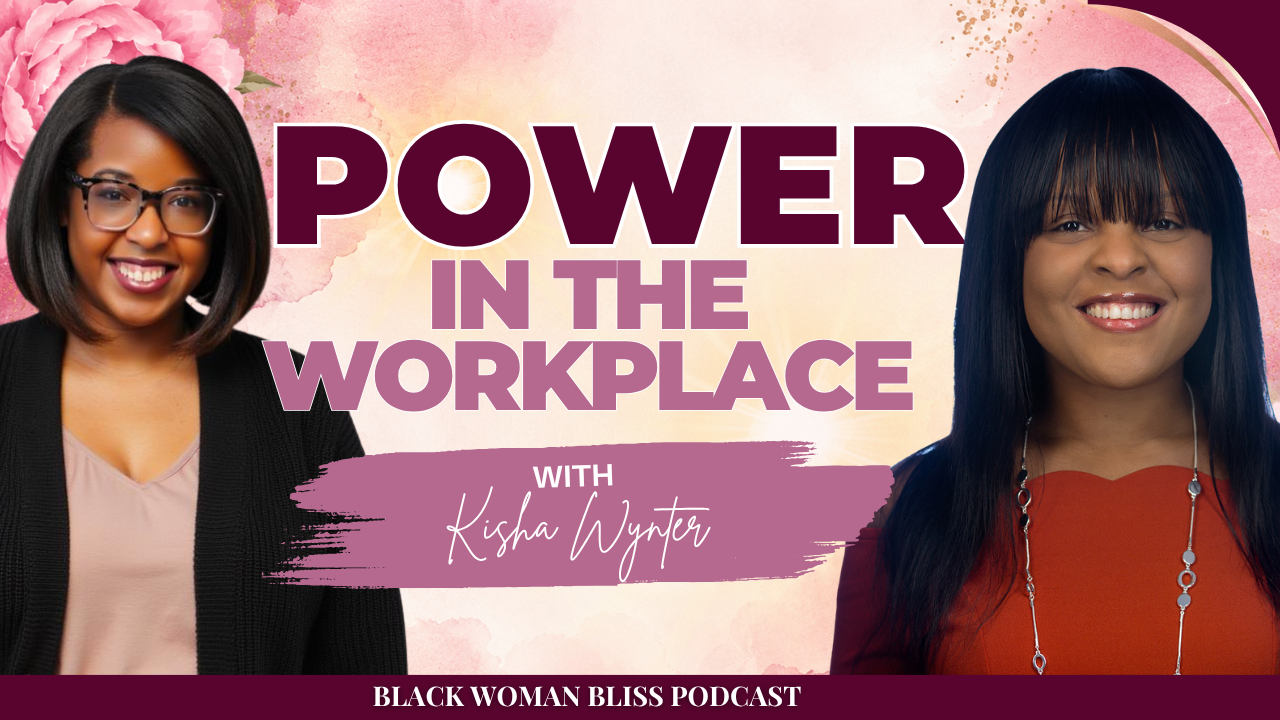
In this episode, I sit down with Kisha Wynter to discuss power literacy and how Black women can tap into power dynamics in the workplace to reach their personal and professional goals.
During this powerful episode, we discuss:
- How to recognize who has power in the workplace
- The different types of power that show up at work
- How Black women can leverage power to increase visibility and opportunity
- The DIVA method as a strategy to increase your power at work
About Kisha Wynter
Kisha Wynter is an executive coach and former Fortune 50 HR leader who helps senior leaders develop power literacy: understanding how influence, decision-making, and authority actually operate inside organizations. She partners with executives to surface hidden performance inhibitors, navigate complex power dynamics, and scale leadership capacity at the enterprise level.
Connect with Kisha on LinkedIn
Get her Book, Your Power Unleashed
About Mercedes:
Mercedes Swan is the Career Love Coach and creates empowering and safe places for high-performing and purpose-driven Black women. Leveraging her experience in HR and DEI, she has a mission to close the pay, promotion, and inclusion gap for Black women and other historically marginalized groups on the way to collective career liberation. She is the founder of the Black Woman Bliss Community and Career Love, a social impact organization
Join the Black Woman Bliss Community
Register for the FREE Black Woman Bliss Webinar:
Get clear on your purpose, pursue it with confidence and bring your career or business into alignment with your dreams.
https://www.mercedesswan.com/bliss
LISTEN TO THE FULL EPISODE

TRANSCRIPTS:
Mercedes Swan (00:34)
we start off with our hot takes. We like to be a little spicy sometimes.
Kisha Wynter (00:38)
it coming in hot from day one, from minute one.
Mercedes Swan (00:42)
Coming hot, okay? We don't do a look warm around here, okay? We gotta speak
the truth and we need other black women to know. So our hot take for you today is what is your favorite power play in the workplace?
Kisha Wynter (00:48)
Yes.
My favorite power play is really just understanding that your performance is only enough to keep you employed, but it's only understanding your power. Power dynamics is what gets you promoted.
Mercedes Swan (01:12)
Okay, period. And I know you're going to expand on that because that is so true. I think we rely on a lot of, we expect our performance to speak for us. We expect that it's going to be recognized and understood. And really we do have to tap into and understand those dynamics. So that will definitely lead us into kind of our first topic of discussion because I know you've got on this journey of really understanding
Kisha Wynter (01:13)
Yeah, period. Yeah, yeah.
for itself.
Yes.
Mercedes Swan (01:40)
the importance of that, and particularly based on your career path, which I want you to definitely share, but it's an amazing career path. And so I think anyone, any of our beautiful black women who are listening, I think will find it inspiring. But tell us about your journey with actually learning what power is in the workplace and your journey to kind of claiming that authority or walking in your power at work.
Kisha Wynter (01:46)
Yes.
Yeah,
and I love it because, you know, I don't know about you, but when how I was raised is that it's to put your head down, work hard and let your work.
Really, it's like cliche, everybody says that your work speaks for itself. And there is just this belief in our society, especially for us that are black women, people of underrepresented backgrounds, we think that just work hard enough and prove yourself and you're gonna get ahead. And then I went into corporate America. And I realized that yes,
doing your job, it keeps you employed. It actually prevents you from getting on a PIP, so Performance Improvement Plan, for those of you who are not familiar. It prevents you from, for the most part, from getting fired. But what it doesn't do is that it doesn't get you promoted, it doesn't get you advanced. And as a matter of fact, I'm gonna contradict myself a little bit, because sometimes you're doing all the work and you're working really hard, but because you don't know who's behind the scenes playing politics,
even in the situations where you're performing well, it can still come back and really bite you, bite you in the butt, as I say. And then you, you know, you're out of a job. There are a lot of people that are high performers that are out of a job, but because they didn't develop relationships with decision makers, they have a, they don't have that proximity to power.
They don't have the insight in terms of how power works. Those are the things. They don't know what the unwritten rules of success are in an organization as it relates to power. Then they do all the work. They put their head down. Somebody steals credit for their work. Somebody presents their work as...
the perk that they did as their own and they end up losing. So for me, when I went into corporate, I had the same thought process and earlier on it was fine. Early in my career, you know, working hard was fine. got me, certain doors were opened. But once you move into middle management, you begin to realize that, you know, you might be playing checkers, but others are playing chess. And it only took a couple of times for me to notice where I have
A good experience at one point where I had a manager, as a matter of before I actually went to report to the manager, I had a leader come to me and he was my manager at the time, this first leader, and he asked me to process a payment. I was in HR, I was an HR coordinator, very junior in my career. I actually just got promoted to HR business partner, but he had asked me to process something in the system and just my integrity, my red flags went off in turn.
and I was asking questions and he was like don't ask me any questions this is my boss right? Just do it. I'm like thinking to myself well if I process this payment and you know there isn't justification it's in my name and somehow I feel like I could get blamed and if he gets run over by a truck you know I was even thinking that
necessarily that he would be shady or anything like that. But I say, if he gets run over a truck by tomorrow, how am I going to be able to explain this? And so at the time I didn't really recognize it as power dynamics per se. But I remember I was just like something internally was just like a red flag, red flag. And so sometimes you just have to also listen to the internal signals that we're getting, even when we don't have the experience. And I listened to the internal signals and I called
an executive that was going to approve all the payments coming through and I said, listen, I don't want you to tell my boss this, right? So confidentially, please, but I was asked to process this and I don't feel comfortable. So I'm gonna put in a system because I don't wanna go against what he says, right? Because he's the one that's over my performance review. He's the one who's over my promotions. He's the one that's over so many things.
in terms of a career that's decisive for me. So I spoke to this executive and I told him, I said, put in the system, you know, reject it and then call him and ask him the questions because he's not answering my questions, but don't say it's from me. And luckily he did that. And he, he was very happy to do that because this leader loved to throw other executives under the bus, which I didn't know it's my first, I took a risk.
I took a risk. So I was just like, you know what? This fight is above my pay grade and they fought it out. But what happened as a result of that? Well, he, the leader came back to me and said, by the way, just forget about the payment. So there was, I still don't know what was shady about it, but there was something shady, but I didn't, I didn't get caught up in that.
But the leader that I had called, said, you know what? I actually want you to come and work for me because I like the fact that you asked questions. You didn't just take instructions and you had, even though you didn't know why, you had a level of clarity that you knew something was wrong. And the fact that you have the integrity not to move forward. That's the type of person that I want to work for me. So within six weeks.
I started working for, I got a promotion, I started working for this person, and then he became a sponsor and an advocate, and I got, I think, promoted three times working for him in less than two years. So I tell the story about that because I think sometimes we think that just by working hard, putting our head down, and executing, that's enough. But if I would have actually done...
what I was told to do, who knows? I might be out of a job. I might have been out of a job. So it just comes to show that you can't just depend on working hard. You've got to ask the right questions. And then there's more. There's about branding and visibility and communications and executive presence and all the things. But for me, in terms of my journey, it was the first thing that I realized. I'm like, it's not just about my work.
It is also about the relationships that I build and how I'm able to communicate with others as well.
Mercedes Swan (08:24)
Yes, I love this. I think it's a really important and impactful story because I don't mean to call anybody out if you make these mistakes because as black women, a lot of times we are not taught these things. But I think those are kind of those unspoken rules and expectations and norms that often we don't get taught because we are taught to just go to work and put your head down and kind of do the work when there are things that integrity and
Kisha Wynter (08:25)
You
Mercedes Swan (08:52)
relationship building and those types of things that you pulled out, but also understanding where your level of power sat, right? Because sometimes we try and overstep that and not maneuver politically when we really should be maneuvering politically to get where we want or what do we need or to be safe. And some people think like, workplace politics is a cuss word. it's like it's part, it's not always bad. We've seen a lot of bad workplace politics. I'm not going to say that they're good.
Kisha Wynter (09:15)
It's like.
Mercedes Swan (09:21)
But there are good ways to use your power and understanding power. And I think that was a really good way to understand that for black women who haven't noticed that pattern in their career. So I really love that you shared that story.
Kisha Wynter (09:34)
And just to double click on what you said, the two things that I wanna double click on, you talked about the maneuvering. I had to figure out, was early in my career, it was my first, I wanna say two or three years in corporate, I was in my early to mid-twenties at that point in time. I was just like, if I...
Mercedes Swan (09:42)
Mm-hmm.
Kisha Wynter (09:58)
go against this executive, this senior executive that my boss reported directly to the CEO of the company. And little me, right? You know, like, that's not a fight I'm gonna win. And so the maneuvering in this situation was I didn't sacrifice my integrity and I did not listen to what I knew was wrong or right. I actually listened to what was right.
Mercedes Swan (10:05)
Mm-hmm. Yes.
Kisha Wynter (10:25)
But then I recognize, is this my fight or is this above my pay grade? Right? And I recognize that, you know what, this isn't my fight. I'm going to try to find the person that he will listen to because I'm going to lose if I try to fight it directly. Right? And each lead, and if you hear what from his story, the little bit of a difference was that my boss at the time, didn't want, he wanted a yes woman, yes man, right? Just do what I say.
But the good thing is when I went and worked for this new leader, he actually wanted somebody that had a contrarian, like he invited that. So we also have to recognize it as black women. I think it really resonates, at least with me it did. In some organizations.
The thing that they hate about you or some leaders hate about you is the things that other organizations will love about you. So I say, I say go where you're celebrated, not tolerated. So he, he hated my pushback, but
Mercedes Swan (11:17)
Yes. Yes. Yes. Yes.
Yeah.
Kisha Wynter (11:28)
The
pushback and the critical thinking and the questioning is what got me the attention of the right leader. And so I went into the right part of the organization that would reward me. So sometimes we stay in organizations, we're trying to fight the fight. And I'm like, no girl, it is not like, we're not on the struggle bus professionally. Let's get off the struggle bus and go into a place where like, I hadn't been promoted for two years working for this guy. The other two years working for the other leader?
Three promotions. Double my salary.
Mercedes Swan (11:58)
Mm-hmm.
Yeah. Okay. We'd love to see it. One little ripple, right? So I want to call, I want to like actually dive into that deeper, right? Because I think for some of us, we get caught in, know, I'm not going to be able to have the career that I love. I'm not going to ever have a supervisor that I can trust or that I feel will really see and value me. And I think that part of that does recognize
You know, some of my best supervisors that I've worked with really leveraged their power and they understood organizational culture and how to navigate that. And they taught me that and that really helped me advance my career. And so I think as we kind of talk about the dynamics where you have this duality of these different leaders, I would love to like tell us a little bit about what you understand or know about workplace dynamics and power dynamics and organizational culture and how that typically.
impacts black women and really explaining like what they are too for people who really don't understand how those two things come together.
Kisha Wynter (12:59)
Yeah, so when it comes to advanced thought, let's start about advancement and promotion. Like I already, my hot take was all about, right? Like it's not just about performance, but there are other things such as understanding how power dynamics and navigating. I call it power might be a triggering word or even politics might be a triggering word for some people. Even better way of saying it is developing organizational savvy.
Mercedes Swan (13:04)
Okay.
Kisha Wynter (13:26)
Right? You're savvy to know how you're going to navigate the organization. Because whenever you're dealing with people, I say this to people all the time, you can either... Power dynamics are always at play, and you can figure out how to engage with it strategically. So I have a term I call power literacy, which means you need to understand how power works.
in specifically within your company, because it may look different depending on the organization and even within teams, and how to engage with it strategically without violating your values, right? And so for me, because if you ignore it, you can't ignore it, it's already there, so if you ignore it, you do so at your own peril, right? ignoring it is not an option, because if you do, there are negative consequences.
To advance professionally, you have to develop this skill, which I just talked about, which is power literacy, which partially means, and one aspect of it is understanding how power works within your organization. Also,
having access to people in positions of power, how do you navigate in a way that you create access or gain access to people in power? Because the organizational chart that we look at is not the power chart. The organizational chart tells you the job title, but the power chart is, it tells you
Who's able to push an initiative across the line? Who's buying do you have to get in to push something across? Who's the influencer? Because it's not always a CEO. Sometimes there's a little person whispering in the ear of the CEO or of a senior leader, and that's the person. You've got to figure out who that is. So it's insight in terms of the dynamics. It's the access to the power. And then it's creating opportunity for yourself. So those are all the things.
that at least a big part of the things that when we I I talk about organizational savvy and power dynamics like that's what you have to learn and Yes, performing is important. I don't want to come across as that's not it because like, know as black women work They say work twice as hard, which I don't believe in but the truth is we've got to work. We've got to prove ourself But it's only one part of the strategy. It's not the entire strategy
Mercedes Swan (16:03)
Absolutely, I completely agree with that and I think there's one piece that I really want to call out that I think often leads to our missteps when we are trying to navigate which is not recognizing like title and Like what we call like, you know positional power or situational power is not necessarily going to impact How things actually get happen.
The wild part is like I actually have worked with a leader before that was more senior to me that had less power in the organization than I did based on my role and my expertise, right? And I've had leaders that they were in a very specific department, but the work that they did spanned the entire organization and they had tons of power and in some ways was even more recognized and valued than the CEO. And I love that too because you look at this and it's like that's at every level.
And that could be anything from, the executive assistant have more power than the directors? Because I've seen that too. And there's just, and I really wanted to call that out because I think that does lead to many missteps where we think we're going to have somebody advocate for the promotion or stand up for us when there's an issue and we really need to go completely to somebody else. And that's why that like cross-organization relationship building and understanding that dynamic is really important. So.
I really wanted to highlight that because it's an important piece, yeah.
Kisha Wynter (17:29)
I want to double click on what you don't click on. right, right, double click on all things. I'm gonna misquote, I believe it Alice Walker, but she said that, you know, essentially her quote, I don't want to misquote her, but essentially the quote says that the biggest thing that somebody could do to take away your power is to make you feel as if you don't have any power.
Mercedes Swan (17:32)
I know we're gonna double click on all the things.
Mm-hmm. Yeah.
Kisha Wynter (17:54)
Right? And so when I go into organizations
and I give talks to women, to black people, to different ERGs, or even across the organization, I'm helping to educate people on identifying where your power lies. And I love that you pulled out one terminology called positional power, because people think position and title are the only ways to have power.
But and you said it, like you said it, what your power was, was your expertise, right? There was a study that was done in like 1959 and it's called Basis of Power. And there are five basis, I think they added two later on. But positional power was one, that's the one that everybody thinks about. But there's expertise, if you have a certain level of expertise that nobody else has.
Or even information which is different from expertise. Maybe you know something under, know, culturally within the organization or you have extra information that other people don't have. Leaders will come to you. So especially when you're more junior in an organization, for example. One of the things that I did in my career, which I did know, it was again subconscious until I was able to realize that, this is actually a competence.
I would be invited to meetings because I had the trust of the employees in the organization working in HR and they would come and tell me everything up to the point where, and I think it's because of my personality, which is referent, I would like, girl, I'm HR. Some things you just don't tell me.
Mercedes Swan (19:27)
Yes, why would you tell me that? my god that was
my first experience my first HR job and I was like and I Kid you not have employees coming to me and they'd be like well you said that so I trust you but like if anybody else said that They wouldn't I was like, but don't tell me things back. I'm just I'm just being honest. Don't tell me back I didn't know that
Kisha Wynter (19:45)
Just don't tell me all this information.
So one, think that, you know, so there are two things operating there. It's like, first is the referent. Referent has to do with your character, your personality. So people, maybe because you're approachable and, you know, even younger people think, like I can tell Mercedes anything. I can tell Keisha anything.
Mercedes Swan (19:51)
you
Kisha Wynter (20:07)
I didn't realize that was a power I had because they weren't telling the senior executives, they weren't telling the senior leaders these things. So in certain meetings, my decisions would be made as like, if you come up with this initiative, this is how people are going to react in the organization. It is not going to, and this is why. And so I found myself being invited into discussions, even though I was not senior leadership, because I had more intel, because I had my ear to the ground.
And so a lot of us as women, as black women, we're the ones that people come and tell things. I was like, okay, so that's, mean, I'm not saying betray people's trust, but thematically you can identify themes and trends and that's information, that's informational power that other people don't have. And so it's identifying, it's not just about title, it is about expertise, it is about your personality, whether or not you're trustworthy. And it is, it's a lot of information.
Right, so it is about really figuring out how power works in your organization, identify the power that you have because we all have power, and then how do we leverage it to give us access and open doors and opportunities for ourselves.
Mercedes Swan (21:16)
Yes, yes. I was like, know we could, I hope we could totally keep talking about that.
So if we know that power is important, there's different types of power. We start to recognize and see our own power. I have also seen black women like, oh my gosh, like particularly black women that are like, yeah, I run the whole office. Like I'm the person that they go to for everything.
you know, I'm like, if I left, they wouldn't know what to do. And I was like, girl, you have all of the cards. You have all of the cards in your hand, right? But they are still afraid to start leveraging that power to navigate the workplace in a way that leads to positive outcomes for them. They only see that as using that type of power is going to actually negatively impact them. And of course, I think you probably know based on what I'm saying, but I think the exact opposite, like go ahead and throw your weight around, girl. Go ahead and get what you need.
Kisha Wynter (22:49)
Girl, they they'll live.
Mercedes Swan (23:13)
But what are your thoughts about this dynamic and like how black women can actually start to become more comfortable with throwing around their weight, so to speak?
Kisha Wynter (23:21)
Yeah,
you know, okay, so I'm going to step back for a minute. I think we've been dancing around this topic a little bit around people feeling uncomfortable to step into their power. And this is why a lot of times people resist. Black women in particular will resist stepping into their power. I'm going to name two reasons why. One, because we know that there are times when we step too much into our power, there is
There's backlash, like, who does she think she is? Put her in her place, she's angry, all the things, right? And so reading the situation and understanding the situation and navigating it strategically is really important. that's one of the reasons why we don't always want to step into our power, because we are subconsciously sometimes and even consciously.
afraid of the consequences. Not everybody's ready for us to step into our power. Let's just be real about that, right? And we've learned to shrink and to step back and to diminish our own power because of those consequences. The second reason why we don't step into our power, it goes back to what I talked about before around values. Because we've seen the...
you know, for lack of a better word, patriarchy way of using power. It's abusive, right? It's zero sum. It doesn't lift everyone up. And so the question I ask people all the time is just, is like, yes, there is a negative way to have power, but there is one that's values aligned. And if you know what your values are, right, part of mine is
integrity, right, as a powerful value of mine, which is why I challenge what that leader asked me, I wasn't gonna do it, even if I lost my job, I probably wouldn't have done it. Or contribution, know, lifting other people up, how do I make other people's lives better? So, when I get power, I'm not trying to use my power to oppress and as a weapon against someone, I wanna use my power.
to uplift and to contribute and to collaborate and make other people's lives better. So I think that is important for that internal shift to happen because we will never step, I'm a coach, right? So I'm always thinking about mindset. We will never use the power we have if we are afraid of being penalized or if we think taking power means that you're being manipulative and political. And so it's really identifying.
like what does power mean to you and how are you going to use it? Because if you decide to use it in a way that uplifts rather than destroys, then you're going to feel a lot more comfortable stepping into it. Does that make sense?
Mercedes Swan (26:19)
Yes, absolutely. One of the questions that I really love to ask when I'm talking to black women who are trying to decide, okay, do I leverage this power or do I throw my weight around? It's kind of like, what do you want? And I love that because it doesn't even have to be, it's not like a selfish, what do you want? But what's the outcome? Do you want to see people do the right thing? Do you want to make sure that people are treated fairly, that you're treated fairly? And I think that's...
very highly connected to the values, right? I think it's so much more than just saying power is manipulated. I'm not saying that to minimize what you're saying, but it is more than that. It's like, it's actually about you and your...
your own experience in those places. And I think that you are calling that out of like, are your values? Like, what do you want to see happen? What matters to you? And I think that's one of those important pieces. Like, I think that's why sometimes, at least for me, if I feel like, ooh, this might go left, but you know, I have to stick to my values. I'm going to do this anyway. And I am going to try and throw around some weight to figure out what's the best way to go forward.
because I feel like it's value space for me. And think that's a catalyst for some of us being able to like leverage it, feel good about it, even if there are negative outcomes. Yeah.
Kisha Wynter (27:32)
Even if
they're negative outcomes. you know, one of my things that I say for my business in terms of my mission and purpose, um, is I want to work with leaders, good people, right? And put them in positions of power so that more good can be done in the world.
Mercedes Swan (27:40)
I don't know.
Yeah.
Kisha Wynter (27:51)
If we take a step back without getting too deep into politics, if we take a step back and we look at our environment that we're in, a lot of people that are in the top positions, they are zero-sum. They are robbing the good from the system, and they are not for lifting everyone else up. And so if we abdicate it to them,
Mercedes Swan (27:56)
Yeah.
Kisha Wynter (28:16)
they're gonna take the power and use it for destruction. And so the reason I'm telling that story is that I have, I'm gonna bring it right back to corporate. had a woman that she, when I was in HR, she had a conversation with me and she said, she was a senior leader, she was just about to make the jump to her first executive role. And she said to me, you know, I thought about this, the journey's over for me, I'm going to, I'm not going up for promotion. And I'm like, girl.
So myself, was just like, why aren't you going up every, like literally she, right? no, she didn't want, she was just like, I look at people in the top positions and I don't want to be like them. I don't have the same values. They don't look like me. They don't sound like me. And I don't want to be who they are. And I said, you know, when I did the skip level and with your team, they said you're the best leader they've ever had.
Mercedes Swan (28:47)
My heart.
Yeah.
Kisha Wynter (29:10)
Right? You actually, one of her employees was so dramatic. He was just like, if I was going to war, would, and they were shooting, I would take a bullet for her. I mean, this is how much her team loved her. was like, this is going to be a big loss. I never hear this feedback from other managers. So I said, if you opt out, then you're not going to, you're opting out of the point where now you can actually make a real difference. Right?
Mercedes Swan (29:17)
Oh my god, that's funny.
Kisha Wynter (29:35)
Stepping into you can choose how to show up. Now you've just been kind of subject to everybody else's whim, but now you're going to be on the executive team. You can make a difference. You can actually throw your weight around. You, other people can look up to you and say, there's somebody that looks like me there. You'll be the representation of demographically and personality wise of what's possible for others. And me tapping into that higher purpose mission and values for her.
Mercedes Swan (29:36)
Yeah.
and
Kisha Wynter (30:05)
made her reconsider and then she decided, know what, you're right, I'm gonna go up. I want to use my power for good. And so that's another reason why I tell people, was just like, well, if you abdicate your power, other people are gonna step in and they're gonna take over and they're gonna not use it for good.
Mercedes Swan (30:13)
Yes.
Yeah, I really, I love that you called that out because I think sometimes, well, yes, of course we do lose really good leaders who are tired of fighting, know, truthfully. And I think there's like this balance between saying, hey, I'm gonna take up space and make change, right? Or I'm going to back out of this or I'm just gonna assimilate. And we have kind of that, like those crossroads in leadership to figuring out what we want, but.
I do think that the only way that we can make change to your point is to be the change that we want to see in those spaces and be that representation. And we do need to take up space. Yes, we want to create our own spaces, but we can't make change in those systems that are already existing if we don't take up that space. And I think it's hard for those who have to kind of sacrifice some things to be in that space too. So don't want to minimize that, but that's a really good point that
Kisha Wynter (31:14)
Yes.
Mm-hmm.
Mercedes Swan (31:23)
it's hard to kind of navigate that and see all of these expectations be set that are really bad models of leadership. Yeah.
Kisha Wynter (31:32)
Yeah, yeah,
and to throw a little bit of a wrench in it, because nothing is that simple, right? I know I gave a very, what's the word, maybe people may think, oh, that's a very Pollyanna response or view. And in that situation, it was the right decision for her, because people respected her. People wanted her to go up. So she had enough positional...
Mercedes Swan (31:38)
Yeah.
Yeah.
Kisha Wynter (32:00)
Well, wasn't position. guess some of it was positional power, but she had enough referent power and credibility in the organization that she was going to be able to make an impact. But honestly, there are other leaders that I work with. I'm an executive coach and I had a couple of people that I worked with. I'm like, girl, this is not the place for you. this is the straw. Like this is not the organization. So, you know, I go back to this quote I said at the beginning, go where you're celebrated, not tolerated. They don't appreciate.
Mercedes Swan (32:18)
Mm-hmm.
and
Kisha Wynter (32:30)
you know, the expertise that you bring to the table and find an organization that will. And trust me, it will be easy because you're a very valuable leader. And so I'm not about just staying for the sake of staying.
I'm there for staying where you can truly make an impact and where it makes sense. And you've got to make the assessment because it's not everywhere that is you built that. What did Shonda Rhys say? Like you belong at the table, but not every room deserves to have you. Yeah.
Mercedes Swan (32:44)
Amen.
Mm-hmm.
Period. So, don't be a martyr, but do your thing, right? Don't be a martyr, but do your thing.
Kisha Wynter (33:06)
Don't be a martyr. Yes, exactly. Yeah,
yeah, yeah. There is nuance. There is nuance for sure.
Mercedes Swan (33:13)
So I love that you were talking about kind of your role as an executive coach. And I think that's a huge gap in what I see, at least for the resources that Black women have available. So in my background experience, I was an executive recruiter. And so in that case, I was almost always interacting with some really high potential candidates. But I had a hard time saying, this is the reason that'd be so great, because I can see the pieces.
But there was that executive presence and philosophy missing where other leaders kind of need to see that. And I think that the parts that you were talking about, about that power and influence and understanding executive presence that you hinted to at the beginning, is a huge part of that. So I would love to share, like I would love to know your experience and like how you see executive presence and like as a coach, how you work with potentially black women who.
haven't necessarily learned how to exude or have that executive presence in their professional journeys. So tell me a little bit about that.
Kisha Wynter (34:18)
Yeah.
So I have a different philosophy. There's like, there are many frameworks and books that I can recommend that talk about executive presence. will tell you all the mechanics of executive presence, right? You know, speak with confidence, like walking like you own the room, have composure, gravitas, all the words, all the words. And I...
Mercedes Swan (34:24)
Yeah.
Kisha Wynter (34:43)
The first thing about executive presence goes back to what I talked about before. It's the internal piece. Because how can you own your power if you are afraid of the backlash that's going to come from stepping into that power? Right? We know that when women step up and they display leadership of characteristics of being assertive, not aggressive, but assertive, people will call them
the angry black woman or the B word, let's be, and I've seen it. seen, I've heard, I've been in the room where people have had those conversations. I'm like, hold up. Johnny over there did the same exact thing, but it was leadership. But when she did it, it was, and so the first thing that has to be addressed is that internal fear of the repercussions of stepping into it. Right. And I think it goes back to,
Mercedes Swan (35:24)
Mm-hmm.
Kisha Wynter (35:39)
Right? Being in a place where there is psychological safety, because I'm not going to tell you to push and do something in a place where there's going to be, you're going to be penalized. So for me, I told my story in the beginning, like that leader didn't like, so I had to work around the thing to say what I needed to say. And when this other leader said like that, you're exactly somebody I want in my organization, that presence, that integrity, that pushback that I brought to the table, he wanted that. He valued that.
Right? And so the first thing it's that internal alignment, also ensuring that you're in a place that you can show up as your authentic self. I don't believe that you have to build executive presence. I believe you have to unleash it. My book is Your Power Unleashed, right? I think we all have power inside of us, but a lot of times it's buried because of fear, fear of backlash, fear of failure. And so for me, it's about...
Yes, read the books and all that about executive presence, but the first thing is being in a place where you're psychologically safe to do so and to be your authentic self. And then second, now when you're in a psychological place, you may feel a little bit intimidated by being in the boardroom or speaking to senior leaders. This is when you begin to practice. Now you practice owning your voice. Now you can practice, you know, having composure under pressure because, and I love it.
I love the word that you said, it's to be seen, because you can have executive presence, but if the organization doesn't, if it's not legible to others, meaning they don't see it and they don't value it, you're not going to be rewarded for it. So I think there are two parts to it. You have to have it, but the organization also has to find value in that aspect of your presence that you bring. And it's different for everybody. That's the other thing I want to say. It's different for everyone.
Some people think there's a prototype of presence, on the room, be the loudest, but it's not necessarily the case because you could be a reflective or introspective person, but your presence or your differentiator is that, you know what, I'm not reactive, I'm calm under pressure. So that composure is a big aspect of my executive presence, not charisma, right? And knowing the difference, like, yeah, I could be charismatic.
But, and that's important, but in other situations, especially in a world where it's volatile, like composure is also really important. So understanding the difference and leaning into your difference as a differentiator, not as a liability.
Mercedes Swan (38:24)
Yeah. I love that you lean into the authenticity because I think so many of us have seen modeled for us and do nor have normalized for ourselves that very like honestly sometimes toxic male energy that in my opinion is rooted in the patriarchy, white supremacy culture, those types of things. And that we then think that we don't have what it takes to be a leader because we don't demonstrate it that way.
Kisha Wynter (38:44)
Yes. Yes.
Mercedes Swan (38:54)
What you were talking about in that psychological safety reminded me of like one of the like weirdest stories for me where I would I mean I'm executive recruiter right, but I'm like 25 and like Talking to all the leaders interviewing screening advising coaching all of these leaders and what I think if I don't know I I I was confident which is kind of looking back at it like girl what
But I remember I had this one individual who that is a large organization and so each of the departments kind of had their own culture and I had this the leader from my department was very much like empowering us like go out there and do what you need to say you're you know, you're working with executives You're empowered to say what you need to say So that gave me all the confidence all of the psychological safety, right? where I was literally like walking into a room to tell like one of the other very senior leaders like a vice president like
hey, you can't say that, you can't do this, you need to go. And it's like, these are things that I think you wouldn't expect somebody at 25 navigating the world with leaders to have that type of power. But why was I able to do that? One, because I had a leader that set that level for me to feel psychologically safe to do that. But it was also a space where I didn't necessarily go in there and like...
handle those conversations the same way that I saw other white male leaders in the past do, it was something where I was able to navigate that authentically as myself. And I think that there's opportunities where we think that we don't have it or we can't. And sometimes that context is very really important. I want to talk now because you've mentioned kind of your Diva method and your book because you do help senior leaders build their confidence, know, walk in authority, authenticity.
So tell us a little bit about the method and also you can talk about if too, if that's kind of connected with your book and how black women can kind of use that to create a career that she loves.
Kisha Wynter (40:52)
Yes, so I'll do a quick flash. This is my book. Your Power Unleashed is called Your Power Unleashed. I'm proud of my labor of love. it's subtitled How Savvy Women Use Courage to Get Promoted, Paid, and Find Fulfillment. And I do talk about power, power leaks, organizational savvy. All the things we talked about is addressed in the book. The DIVA method is a specific framework that I have.
Mercedes Swan (40:57)
Yeah
Beautiful.
Kisha Wynter (41:20)
Remember in the beginning I said, you know, when I entered into the corporate, it was all about just deliver results. That's perform. Performance was the thing. And so I created a four step framework, D-I-V-A means something, DIVA, that really helps you to understand what is the full strategy that you need to have in place to help you advance professionally. Because performing, which is the D, deliver results.
is just one step. What are the other three? So the eye is for image, right, which is your brand. What do people say about you when you're not in the room? What is that differentiator that you have, right? Are you the one with the deep domain expertise? Do you have a high state ratio? Do you have some, you're somebody that is having high composure, for example, you don't get rattled easily.
or maybe you're charismatic and you're influential. What's the brand? What are you known for? One example for me, I'll give you the story real quick, was I had a friend who was a coach as well when I was in corporate. She asked me, what do I want to be known for? And I was just like, well, I want to be known for being a coach. And I'm working in a predominantly white male organization, so I want to ensure people learn from me how to be inclusive. And I remember my last conversation when I resigned out of corporate.
my leader who was a white male said to me, you know, it's been such a pleasure working with you. And the two things I want to say I really learned from you is really how to coach people to higher performance. And then, and the second is how to be like, you're always calling me out for not being like, not thinking like having a global mindset. Because we worked in a very global organization, and that's being inclusive. I said, look at that. And that helped me when I transitioned.
into my consulting practice because people reach out to me and said, we need somebody to coach. That's what I was known for, right? Or we need somebody to come in and do a training on inclusion, what I was known for. So that brand not only allowed me to ascend within the organization, but when I left, it helped bring in business for me when I became a consultant. So that's the I. Then the V is for visibility, right? Because if you could be the best...
You don't want to be the best kept secret in town. You're performing, you have a good brand, people are saying good things about you, but nobody knows who you are. You have to be able to, you know, be visible. So whether or not it's cross-functional projects or presenting or speaking up in a meeting, but finding different ways that people in positions of power can get to know you and your value and your impact. And the last A, last letter which is an A, it's your advisory board.
also known as your personal board of directors, that has mentors, coaches, sponsors, people that are gonna open doors for you that you cannot open for yourself or advise you or mentor you. that's the four step process and that's why I say performance is not enough. You need a full strategy and that really is part of the strategy.
Mercedes Swan (44:26)
Mm-hmm.
Yes, well we will have information to work with Keisha as well as the book listed in the show notes. So I encourage you to check that out because I really do think we leave so much opportunity on the table by not doing lots of the things that you've mentioned in the Diva method in your book.
As you know, the Black Women Bliss podcast definitely talks about career, but we also have so many Black women in our audience who are wanting to leverage that experience, what they're known for, like you mentioned, right, to create a business and kind of solidify their own path to doing things their own way and on their own terms. And so would love to know a little bit about that journey as well. You've written your book, you're an author, you coach, you're consultant, and all of these great things.
Tell us a little bit about how you've actually leveraged that professional experience to be able to build your business.
Kisha Wynter (45:24)
Frankly, I've never thought of myself as becoming an entrepreneur or starting a business. I only saw myself being an employee working in corporate. But because I wanted to bring value within my organization,
I said one of my personal values I said before is contribution. And one of the things that came up over and over again when I worked in corporate, this was, know, women in general, so white, black, Latino, Asian. One the things that came up when we would have promotion meetings is, this woman is, have deep domain expertise. They know their stuff.
but the one thing they don't have is that leadership presence, that confidence. And I was so tired of hearing it, I said, like, okay, like, I know I struggle with some of these things in my career, and I also know the organization has to change to make it safe. So what do I do? How can I help? And so, as somebody who had gone through it myself personally and also got a certification in coaching, I said, I'm gonna just develop a coaching program around this topic.
And I did. I asked, or well, I didn't ask the CEO, like another executive helped me get in front of the CEO and we're like, we're going to roll out this program and let's talk at a conference. And he was just like, oh, this is such a, he was like, this is such a good idea. You should forget this company and go do a Ted talk.
Mercedes Swan (46:43)
Yes!
I love it.
my gosh, the support. I love it.
Kisha Wynter (46:52)
is a right, which I didn't do, but that planted
the seed in my head. So I did the program, it was successful, people got promoted. But then I realized, I'm like, well, if this is gonna be successful internally, I can do this outside the company. So I did a little beta while I was working and people paid me and I was like,
This could people pay me for my expertise that I developed in corporate, by the way, coming back to your question, right? That expertise and the knowledge I gained was from my corporate job. And once my expertise and my personal mission aligned, I said, you know what?
Mercedes Swan (47:22)
Yeah.
Kisha Wynter (47:33)
I know it brings value, people want this, I'm gonna bring this out into the world. And that's really how. So I tell people all the time, when you work in corporate, your expertise and the knowledge and the skill set and even the stamina to deal with difficult situations, because trust me.
like difficult situations happen when you're an entrepreneur. You learn so many things professionally and personally when you are an employee that are totally transferable to those. So said double down, build the expertise, get the knowledge, build the network. That's the last thing I wanna say about it. It's my first...
Still, more than half of my clients came from my corporate network. I mean, very first corporate contract was somebody said, coach me and now I live in Dubai and I want you to coach this entire organization. Okay, right? Those professional networks that you make, don't burn your bridges, leverage them, use them. So again, it goes back to the Diva method. If I didn't have a good brand internally, then they wouldn't have asked me to come externally and do the work. So.
leverages expertise for your business. It's transferable.
Mercedes Swan (48:41)
Yes, I also want to really call out this because some people like they want to build a business and something that they may not be doing. And it sounded like this was not something that you were doing day to day. It's like a need that you identified and you did something that was kind of like a side quest a little bit, which is like, do yeah, like you like find opportunities to do things like I was in HR, right? And it would come up that like maybe employees weren't a great fit or maybe.
Kisha Wynter (48:56)
Yeah, a project, yeah.
Mercedes Swan (49:08)
like it was an intern, but we didn't have space for them. And I would kind of do a little bit of coaching like on the side, like in my, you know, with generally doing HR work, right? Which didn't really include the kind of career development coaching at the time. Now Mercedes ended up doing some more of that later, which is like the whole point, but like you can find opportunities to kind of start to grow and learn that skill and like have your work, like let your job take on the risk of launching the program.
Kisha Wynter (49:24)
Yeah.
Exactly.
Mercedes Swan (49:36)
before you choose
to do that and kind of get clear and like have that. And then I love it. I love we all have that moment. like, and girl somebody paid me. my gosh, they paid me. They paid me.
Kisha Wynter (49:43)
Paid me. I'm like, what? They will pay me actual dollars?
I'm like four people to this day. Those women, they know who they are. They kind of listen to this podcast. They know they were my first four. I was just like, y'all gave me the courage to quit.
Mercedes Swan (49:55)
It beautiful.
Yes, that's how I think about my first clients. was like the first client that was on that $65 a month coaching subscription. I love y'all bad. OK, y'all the real ones. Y'all the OGs.
Kisha Wynter (50:08)
Okay? The real
ones, the real ones before the book came. Right?
Mercedes Swan (50:18)
But for the website, I mean, the website was like, woo, girl,
it's a Facebook page, OK? Network, like you said. So I love this. This conversation has been amazing. We broke down executive presence. We broke down power. We broke down leveraging your skills and understanding your brand. We covered a lot. So this is really, really amazing. I want to give you an opportunity, if there's anything that you feel like you
Kisha Wynter (50:25)
Yes, network, network.
We covered a lot.
Mercedes Swan (50:45)
wanted to say or any last closing words of advice as we wrap up, please share that. And then also, of course, tell our audience how they can connect with you as we close our episode today.
Kisha Wynter (50:58)
Yeah, I think it goes back to one of the things I started with earlier on is that the way someone can really strip you of your agency is to make you believe you have no power. We all have power. We all have agency. We just have to be able to identify where that power is and not be afraid to step into it. And if you're in a place that discourages you from stepping into that power, find a new place.
find a new place.
And where can you find me you can find me primarily on LinkedIn? Keisha K. I SHA winter with a Y so w y and t are I'm also on Instagram have a few YouTube videos and yeah, if you look up my name in on Amazon You can also find my book your power unleashed. I know you'll have my website as well So I'll believe that for the link But yeah, that's how people can connect with me and find me and send me a DM to like I answer my links
Mercedes Swan (51:50)
Bye bye.
Kisha Wynter (51:59)
DMs particularly, in particular.
Mercedes Swan (52:00)
Ooh, okay, that's rare, okay? Because LinkedIn out
there, LinkedIn DMs are rough, so you better take up on that. Build those relationships, okay? So thank you, Keisha. Like I said, this has been a really fabulous conversation for our listeners. All of Keisha's information will be listed below. I hope you do take time to engage with her.
Kisha Wynter (52:08)
You
Mercedes Swan (52:24)
And of course we do hope that this episode inspired you to enter your Black Women Bliss era, okay? Build the career that you love, build the business that you love. Life is short, you have the power, okay? Don't let the world, okay, don't let what's going on out there keep you away from doing what you wanna do. It's a lot, but do it.
Kisha Wynter (52:38)
Listen, it's a lot, but do it, just
do it as they say, just do it. And it's been such a pleasure, May say this. Thank you so much and for the community you've created through this podcast and what you do.
Mercedes Swan (52:44)
Just do it, okay? Thank you.
thank you so much. Thank you. Yeah, I love like I said, I love having these conversations. I love sharing more of this. So as we wrap up to our listeners again, check out the show notes, engage with this podcast on wherever you are listening, leave us a review, And also if there is another black woman that you love, your professional sister in love, share this podcast with her so that she can learn to throw some weight around, okay? Use the power, okay?
So until next time, me and Keisha are wishing you much bliss and much success in building a career business and lifestyle you love.
Author